
- 4E, No.3 Shenfeng Road, Liuyao Community, Henggang Street, Longgang District, Shenzhen,China
- cc.shen@xypltd.com
- Call: +86 15112667855
News
How to connect traditional factory automation systems with Industry 4.0 without stopping work
- 2026-11-25
With the development of Industry 4.0 and the Industrial Internet of Things (IIoT), factories are undergoing a huge transformation. In addition to other large-scale automation functions, Industry 4.0 has also brought extensive machine to machine communication (M2M) to the workshop. This creates opportunities for more data collection and analysis, thereby improving productivity and production efficiency.
Although the development speed of M2M has been accelerating in recent years, it is not a new thing and has been a part of factory digitization for decades. Modern wired and wireless M2M technologies such as industrial Ethernet and Wi Fi are both streamlined and efficient, but this long history means that many traditional networks still exist. This type of network uses outdated technologies such as programmable logic controllers (PLCs) to transmit data through wired networks, using serial data technologies such as RS-232 and RS-485.
This puts factory managers in a dilemma. Retaining the old communication system means missing out on the production benefits brought by Industry 4.0, but upgrading factories to introduce industrial Ethernet is both expensive and can cause downtime. Even worse, many older machines are typically controlled by new generation PLCs that are incompatible with newer industrial Ethernet protocols such as Ethernet/IP and Modbus TCP, and these machines may have many years of service life. Industrial gateways can bridge the gap between traditional infrastructure and Ethernet backbone networks, becoming an economical and efficient temporary solution.
This article will briefly introduce the advantages of industrial Ethernet networks and modern industrial protocols in improving factory productivity and efficiency. Then, introduce how industrial gateways provide fast and easy bridging solutions for traditional infrastructure and Ethernet backbone networks. This article will take Weidm ü ller's two industrial gateways as examples to illustrate how to use these gateways to connect PLCs running RS-232/RS-485 serial data technology to Ethernet/IP backbone networks.
A Brief History of Industrial Automation
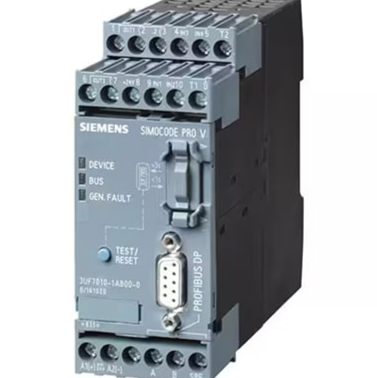
The digitization of factories began with the invention of PLC in 1969. PLC is a specialized computer that runs a single program continuously. The main advantage of PLC is that it can execute programs almost in real-time and highly repeatable. In addition, PLC is relatively economical, reliable in performance, and sturdy and durable. For example, the Siemens SIPLUS device is a great product and uses an RS-485 serial interface (Figure 1).
Siemens SIPLUS PLC equipment using RS-485 serial interface
Figure 1: PLC is the backbone of factory automation, with low cost, reliable performance, and durability. (Image source: Siemens)
In the early days of factory automation, manufacturers used RS-232 to connect PLCs to central monitoring systems. This is a wired serial data link with a maximum throughput of several hundred Kbits/s. This data link uses ground voltage to represent the number "0" and ± 3 V to 15 V voltage to represent the number "1". Later, RS-422 and RS-485 took wired communication to a higher level by utilizing differential signals on twisted pair cables. These systems allow one controller to monitor up to 32 PLCs, with data transmission rates of up to 10 Mbits/s and transmission distances of up to 1200 meters.
It is worth noting that RS-232 and RS-485 are standards used to specify the physical layer (PHY) and do not specify communication protocols. In the field of industrial automation, various protocols have been developed that can run on RS-232 or RS-485 PHY. For example, Modbus Remote Terminal Unit (RTU), Modbus American Standard Code for Information Interchange (ASCII), DF1 Common Industrial Protocol (CIP), DF1 Programmable Controller Communication Command (PCCC), Point to Point Interface Protocol (PPI), DirectNET, Collaborative Processing Communication Module (CCM), and HostLink. Many PLC manufacturers develop and support these protocols.
It has been proven that PLC is a stable, reliable, and flexible way to bring automation into the workshop, while RS-485 and its related industrial protocols provide a low-cost and easy to install network technology. Nowadays, PLCs are commonly used to control the entire assembly line, and most industrial automation uses some type of PLC. Thousands of factory automation devices are based on traditional RS-232 and RS-485 networks.
Ethernet enters the factory
However, since the beginning of this century, Ethernet has become the most convenient and mature solution for modern factory networks. Ethernet is the most widely used wired network and has received extensive support from suppliers. Ethernet usually uses TCP/IP (part of the Internet Protocol (IP) suite) for routing and transmission, so as to ensure the interoperability of cloud computing. This capability is far beyond RS-232 and RS-485 technologies.
Industrial Ethernet "describes Ethernet systems suitable for factory use. The characteristics of these systems are sturdy and durable hardware, as well as industrial grade software. Industrial Ethernet is a mature factory automation technology that allows remote monitoring personnel to easily access drivers, PLCs, and I/O devices in the production workshop. Infrastructure typically adopts linear or circular topology structures, as these structures are advantageous in shortening cable lengths (reducing the impact of electromagnetic interference (EMI)), minimizing delays, and establishing a certain level of redundancy.
The communication mechanism of standard Ethernet is prone to interruption and packet loss, which increases latency and is not suitable for the near real-time requirements of fast movement and synchronous production lines. This environment requires a definite protocol to ensure that machine instructions arrive on time every time, regardless of the network load.
To meet this challenging requirement, customized software can be used to assist industrial Ethernet hardware. There are currently several mature industrial Ethernet protocols, including Ethernet/IP, Modbus TCP, and PROFINET. Each protocol aims to ensure high certainty in industrial automation applications.
Standard Ethernet includes PHY, data link, network, and transport layer (using TCP/IP or UDP/IP as transport protocols), and can be seen as a multifunctional communication mechanism that can improve efficiency and speed. On the contrary, industrial Ethernet protocols such as PROFINET use the application layer of the industrial Ethernet stack (Figure 2).