
- 4E, No.3 Shenfeng Road, Liuyao Community, Henggang Street, Longgang District, Shenzhen,China
- cc.shen@xypltd.com
- Call: +86 15112667855
News
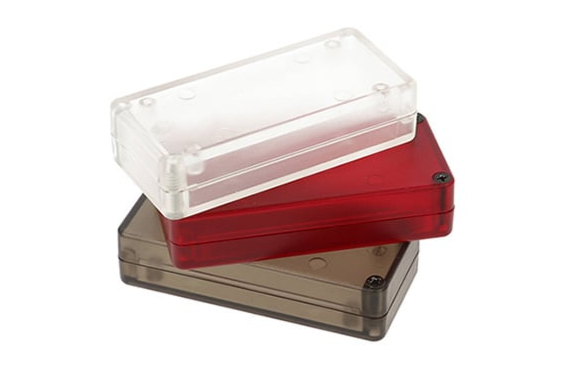
Weigh the pros and cons of shell materials
- 2026-09-24
There are various styles, sizes, and shapes of shells, but the shell material is often the primary consideration when purchasing new products. It can also be said that the shell material is the biggest factor affecting the performance of the shell. Knowledge of commonly used materials is crucial for planning, procuring, and maintaining electrical and electronic components.
Generally speaking, shell materials can be divided into two categories: metallic materials and non-metallic materials.
non-metallic materials
Most non-metallic shells are made of plastic, usually ABS or polycarbonate, but non-metallic materials also include fiberglass.
Non metallic materials are transparent to radio frequency (RF) waves and are ideal for wireless communication devices that require easy signal transmission and reception. But this is also a double-edged sword, as if the device needs to isolate electromagnetic interference (EMI) and radio frequency interference (RFI), this characteristic will have adverse effects.
ABS
Acrylonitrile butadiene styrene (ABS) is a low-cost thermoplastic that is easy to process and shape. ABS is the preferred plastic for indoor use, although relatively economical, it has excellent impact resistance, heat resistance, and versatility. General purpose ABS (GPABS) is the most economical type, and there is also flame retardant ABS (FRABS), whose flame retardant performance reaches a medium to high level (UL 94V-0).
ABS shells are usually black, gray, or white, but colored shells such as yellow, red, and blue are also not uncommon. ABS is easy to process and modify. Unfortunately, this material is not suitable for high-strength applications and it is difficult to make ABS transparent.
Image of Hammond's 1551MINI series ABS plastic casing
Figure 1: Hammond's 1551MINI series ABS plastic casing. Due to the fact that ABS cannot be completely transparent, semi transparent or "frosted" ABS is very common. (Image source: Hammond Manufacturing)
polycarbonate
Polycarbonate is the star of the plastic world. This material has excellent impact resistance, a wide operating temperature range, and excellent resistance to UV damage, making it the preferred plastic for many outdoor, high impact, and marine applications. UV resistant polycarbonate can prevent fading and brittleness due to sun exposure, and it is naturally transparent. Therefore, polycarbonate is often used in products such as eyeglass lenses, racing windshields, and high-quality casings. Polycarbonate has a high flame retardant rating. As expected, the economy of polycarbonate is not as good as ABS, especially in the early stages of the project. However, in the long run, polycarbonate is durable even under harsh conditions, which can actually save costs.
Hammond's 1591T series shell image
Figure 2: Hammond's 1591T series transparent polycarbonate plastic casing. (Image source: Hammond Manufacturing)
Fiberglass
Fiberglass reinforced polyester, abbreviated as FRP or GRP, is composed of fiberglass reinforced polyester plastic. Like polycarbonate, FRP is also suitable for outdoor use, with excellent impact resistance and a wide operating temperature range, even wider than polycarbonate. However, FRP may fade due to exposure to ultraviolet radiation. Due to the composition of FRP, it disperses glass particles during cutting, therefore specialized PPE (personal protective equipment) and tools are required for modification.
Both polycarbonate and FRP have excellent chemical resistance and are very suitable for use in salt containing environments. FRP is resistant to solvents, dilute acids, and dilute alkalis. Polycarbonate also has good tolerance to acids, certain solvents, and bases. Before selecting materials, it is essential to conduct research on specific hazards.
Picture of Hammond part number 1590ZGRP084
Figure 3: Glass fiber reinforced polyester shell, Hammond part number 1590ZGRP084. (Image source: Hammond Manufacturing)
Metal materials
In contrast to non-metallic materials, shells made of metal have better shielding against RFI and EMI. The contact between metals is crucial for complete shielding and grounding, which is a necessary process to ensure safety when handling electrical equipment inside the enclosure. Metal materials are generally suitable for outdoor use and have excellent impact resistance.
For metals, it is very important to pay attention to electrochemical corrosion (also known as heterogeneous metal corrosion). If two different metals come into contact with each other, the metal with stronger "alkalinity" or easier to give up electrons will begin to accelerate corrosion, causing structural and visual damage. For example, users should be careful not to use galvanized screws or galvanized steel connectors on stainless steel shells.
aluminium
Aluminum is a non-ferrous metal that, although relatively lightweight, is very strong. In addition to various forms such as aluminum plates, extruded aluminum, and die cast aluminum, the characteristics of aluminum also vary depending on the alloy used. An alloy is composed of a substrate (aluminum) and other metals or elements. Some alloys are stronger, more resistant to tension, or more receptive to certain surface treatments than others, and so on.
Aluminum is easy to process and shape, making it the lowest cost metal shell material.
Die-cast aluminum
Die cast aluminum shells are produced by pouring molten metal into a forming mold (also known as a cavity). Die cast parts are most suitable for small and medium-sized casings, while large products often use metal plates instead of cast metals. This process has a fast production speed and consistently produces products. Both die-casting shells and injection molded plastic shells have a characteristic called demolding angle. The box wall must be slightly tilted outward so that the outer shell can detach correctly from the casting. Therefore, the walls of the die cast aluminum casing will have several degrees of inclination.