
- 4E, No.3 Shenfeng Road, Liuyao Community, Henggang Street, Longgang District, Shenzhen,China
- cc.shen@xypltd.com
- Call: +86 15112667855
News
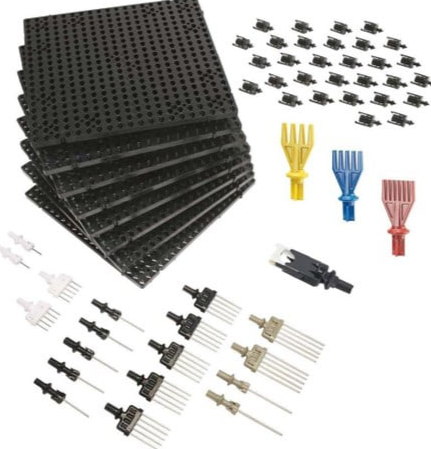
Use Panduit's wiring harness assembly board system to break free from the constraints of plywood and nails
- 2026-09-29
The prototype development and production of wire harnesses can be vividly referred to as the "sausage making process" in electrical engineering - customers can enjoy its benefits without seeing it with their own eyes.
From manufacturing and aerospace to automotive and consumer applications, wire harness assembly is key to ensuring safety and customer satisfaction, but it often relies on cumbersome and outdated technologies such as plywood and nail assembly boards. There must be and indeed is a better way to complete this task.
Although there is no precise estimate, due to the numerous industries that rely on wire harnesses, billions of wire harnesses may be manufactured each year. The automotive industry is undoubtedly the largest market, as millions of cars are produced each year, and each car must use multiple wiring harnesses. With the increasing popularity of advanced driver assistance systems (ADAS) and the industry's shift towards electric vehicles, the demand for wiring harnesses is also growing rapidly.
It is estimated that the total market value of wire harnesses will reach 95.5 billion US dollars in 2023, with a compound annual growth rate expected to exceed 4% by 2032. In addition to the automotive industry, other applications that promote the demand for wiring harnesses include aviation and spacecraft instruments, intelligent manufacturing, consumer electronics, telecommunications, healthcare, various defense systems, as well as the overall growth of electronic devices and systems in various industries and consumer markets.
Due to a large recruitment gap, this growth is at risk. In the manufacturing industry, although the current number of employed people has exceeded pre pandemic levels, companies still face significant difficulties in retaining existing employees and attracting new ones. This situation may result in over half of the estimated 3.8 million job vacancies between 2024 and 2033, as manufacturers struggle to find alternatives for 2.8 million retirees and fill other positions created by growth.
In many cases, numerous companies are overcoming issues related to human resources by accelerating the adoption of digital technologies and processes. However, although manufacturers are using advanced tools such as 3D modeling and computer-aided design, the wire harness assembly process still requires human skills to nail the design pattern onto the laminated board.
These sections provide a stable surface for wiring harness design. Nails inserted into plywood can provide physical guidance for assembly personnel, enabling them to accurately route, install the required connectors and terminals, and bundle components together. New jobs typically require taking out a piece of plywood from inventory and starting from scratch. The result is low efficiency, and assembly personnel have to continuously replenish plywood.
Relieve bottlenecks
For industries that strive to accelerate product launch time and improve their sustainable carbon footprint, the cost of purchasing and storing plywood and nails, as well as their impact on productivity, pose insurmountable obstacles.
Panduit is a supplier of physical, electrical, and network infrastructure solutions for various commercial environments. Its solutions can increase the efficiency of wire harness production time by up to 18%, reduce storage space by more than half, and reduce wiring and circuit board production costs by up to 65% for multi variety, small batch wire harness manufacturers.
The company's Quick Build wiring harness system is based on 305 mm x 305 mm (12 in x 12 in) QB Tile grid blocks (Figure 1), featuring modularity and reusability. Each kit contains eight grid blocks that can be added or removed according to different harness configurations.
Picture of Panduit Single QB Tile
Figure 1: A single QB Tile is connected to other grid blocks to create an assembly board that meets the wiring harness configuration requirements. (Image source: Panduit)
Grid blocks can be installed and reconfigured on plywood using screws installed by the user, making it easy to reuse plywood and reducing inventory and storage costs. Alternatively, assembly personnel can also use QB-CONN connectors (five per pack) to avoid using plywood, which can precisely align the grid system.
Reusable wiring accessories
Once the grid is in place, various reusable Quick Build accessories will twist and lock into place, enabling fast routing and design flexibility without the need for nails, buckles, or magnetic fixation methods. These accessories can be easily repositioned in the holes of the grid block to optimize the layout of the wiring harness.
The QB-MOUNT-L installation hook (Figure 2) that can be repositioned can be inserted into the holes of the grid block and locked in place by rotating it a quarter turn, providing anchoring points for other accessories to rotate as needed to simplify the assembly process.
Picture of Panduit's Quick Build installation hook
Figure 2: Quick Build installation hooks inserted into grid blocks to provide anchoring points for other Quick Build accessories. (Image source: Panduit)
These installation hooks are suitable for Panduit's various Quick Build harness board accessories, including:
Single nail clamp, including QB-SN1-Q, can accommodate HBN1-T 1-inch harness board nails as well as 2-inch and 3-inch harness board nails for creating channels and branching channels
Multi pin clamp, including QB-FN1-Q, can accommodate 1 to 5 1-inch harness board pins, as well as 2-inch and 3-inch harness board pins
Wire end clamp, including QB-WEH1012-Q (Figure 3), can clamp three wires of 10 to 12 gauge, and there are also versions for clamping wires of 14 to 16 and 18 to 22 gauge
Picture of Panduit's QB-WEH1012-Q Quick Board Terminal Clamp
Figure 3: QB-WEH1012-Q Quick Board Terminal Clamp. (Image source: Panduit)
Installation hooks can also be used to secure installation platforms, such as QB-BASE175-Q (Figure 4) with dimensions of 44.45 mm x 44.45 mm (1.75 in x 1.75 in), and QB-BASE120-Q with dimensions of 30.48 mm x 30.48 mm (1.2 in x 1.2 in). The platform allows assembly personnel to install traditional harness board accessories, such as elastic fixators, harness board nails, harness fixators, corner posts, wire end clamps, sector plate clamps, and user provided testing fixtures.