
- 4E, No.3 Shenfeng Road, Liuyao Community, Henggang Street, Longgang District, Shenzhen,China
- cc.shen@xypltd.com
- Call: +86 15112667855
News
USB PD 3 power receiving controller provides support for USB Type-C applications
- 2026-10-14
As regional regulatory agencies begin to require the adoption of standard USB Type-C based technology ® The universal charging solution for cables and connectors, and the window period for dedicated device chargers are rapidly closing. To meet this standard before regional requirements are introduced, product designers can use USB Power Delivery (PD) power receiving end controllers to negotiate power transmission between devices and chargers, thereby optimizing their applications and welcoming the arrival of the new era.
After December 2024, in the European Union, any wired charging device that requires a maximum power of 100 W must use a USB Type-C charging port that complies with the USB PD specification (laptops are temporarily exempt from this regulation until 2026). In addition, the same laws in India and Saudi Arabia will come into effect in 2025, followed by California in 2026.
The USB Type-C itself can only provide 5 V voltage at 3 A current, with a total power of 15 W. To achieve 100 W power, it needs to comply with USB PD 3.0 or USB PD 3.1 specifications to ensure that the Type-C connector can negotiate higher voltage while transmitting high-speed data.
USB PD 3.0 is capable of transmitting up to 100 W of power, as well as fixed voltages of 5 V, 9 V, 15 V, and 20 V, with a maximum current of 5 A. The latest USB PD 3.1 specification includes Extended Power Range (EPR) and Advanced Voltage Supply (AVS), which can increase output power up to 240 W and add three fixed voltages of 28 V, 36 V, and 48 V.
The USB PD 3. x specification improves on the earlier PD 2.0 version by increasing the amount of information exchanged between the power receiving end (device receiving power) and the power supplying end (device providing power), and taking into account some factors that may affect the application, such as the charging status of the device battery, battery temperature, faults, and overvoltage.
The 100 W power provided by USB PD 3.0 is sufficient to charge some laptops, monitors, and even some televisions. USB PD also supports video and audio output standards including DisplayPort and HDMI, as well as data transfer protocols such as Thunderbolt 3.
Provide enhanced applications
By utilizing USB PD 3. x, product designers can provide users with a better experience, not only faster charging and data transfer rates, but also compatible with various devices with just one cable and one connector. At present, consumers and businesses need to use multiple cables and chargers to charge different devices, resulting in a large amount of electronic waste. In the future, designers can claim that this situation will be improved.
This technology enables designers to reduce the use of ports and components, thereby simplifying the design. In addition, this can eliminate the weight and additional packaging of the charger, thereby reducing manufacturing and transportation costs, and eliminating the need to invest effort and time in updating chargers specifically for new devices.
By using a single cable and connector to achieve multifunctionality, designers can focus on developing better new applications, fully utilizing the high power and data transfer rate of USB Type-C PD. They can also expand the connectivity and compatibility of devices through additional features such as docking stations, hubs, and converters, enhancing the user experience and functionality of the product.
When developing new applications using USB PD 3.0, product designers face some challenges, such as complying with USB PD specifications and ensuring interoperability with other devices and chargers.
Preventing damage or injury caused by overvoltage, overcurrent, or polarity reversal is another key issue, especially in solutions using this technology where the circuits and firmware are more complex than previous generations of products. A power transfer controller that supports multiple protocols and configurations, as well as an evaluation board that enables rapid prototyping and validation, can help overcome these challenges.
Utilize the role of USB Type-C PD
The key to USB PD 3.0 is the ability to use standardized protocols to negotiate and manage power transfer between the power receiving end and the power supply end. The USB PD power receiving end controller negotiates with the USB PD power supply end (such as charger) to obtain the power configuration file of the device. Equipment that meets the standards can request and provide different voltages and currents according to their own needs and capabilities, and dynamically adjust the power level during operation.
The negotiation and management process of power transmission includes four stages:
Discovery: It occurs when the receiving end and the supplying end mutually recognize each other as devices that comply with USB PD, and establish a data communication channel through the configuration channel (CC) pin on the USB Type-C connector.
Capacity exchange: When the power supply side determines the power configuration files (voltage and current levels) it supports from the power receiving side, and then the power receiving side requests a configuration file that meets its requirements.
Power contract: The process in which the power supply side accepts or rejects requests from the power receiving side. If accepted, the power supply end will provide the requested power to the receiving end according to the agreed power parameters.
Power rule update: Enable the receiving or supplying end to initiate new power negotiations to adapt to changes in battery capacity or load at the receiving end, or changes in input power at the supplying end.
USB PD 3.0 adopts extended messaging to manage the exchange of information between the power receiving end and the power supply end, such as battery status, temperature, or manufacturer specific data. It also supports Programmable Power Supply (PPS) mode, enabling finer control over the output voltage and current of the power supply end, and seamlessly switching power roles between the power receiving end and the power supply end without interrupting data communication.
Another key feature of USB PD 3.0 is reverse charging, which allows devices with larger battery capacities to charge devices with smaller battery capacities regardless of their power role. Therefore, for example, using the same USB Type-C cable, a laptop can charge a smartphone, and this smartphone can also charge headphones, which is a blessing for users who carry one cable to charge multiple devices.
Reverse charging may not be compatible with all devices or chargers. In addition, it may also shorten the battery life of power supply equipment and increase the complexity and cost of circuit design. Therefore, like all electronic applications, product designers must weigh the pros and cons of implementing reverse charging, ensure they comply with USB PD 3. x specifications, and test interoperability with various devices and chargers.
USB 3 power receiving terminal controller
In order to implement the USB PD 3. x function in the device, product designers can use a dedicated power receiving end controller to support the protocol and handle communication with the power supply end device.
Dior Incorporated provides highly integrated and cost-effective solutions that offer fast charging, reverse charging, PPS mode, and other USB PD 3. x features. They also support traditional protocols such as Qualcomm Quick Charge 4+and Huawei FCP/SCP, ensuring compatibility with various chargers and adapters.
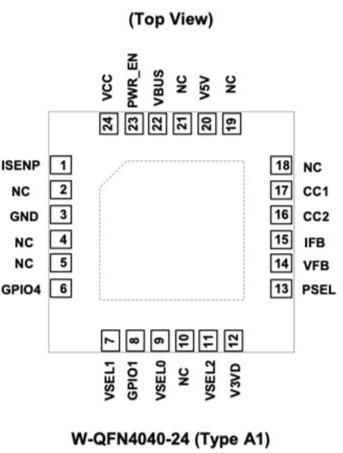
AP33771 (Figure 1) is a USB PD 3.0 controller with firmware that complies with the USB PD 3.0 standard and a pre installed power menu interface, making it easy to use. It provides an output channel that can deliver up to 27 W of power.