
- 4E, No.3 Shenfeng Road, Liuyao Community, Henggang Street, Longgang District, Shenzhen,China
- cc.shen@xypltd.com
- Call: +86 15112667855
News
Understand GFCI and other protective sockets
- 2026-09-28
GFCI socket
GFCI stands for Ground Fault Circuit Breaker. As long as there is a ground fault or leakage current, this socket will trip. GFCI sockets are commonly found in bathrooms, kitchens, or other damp and water intensive environments. Even with an unbalanced current of only a few milliamps, this socket can cut off power in a few hundredths of a second, preventing electric shock.
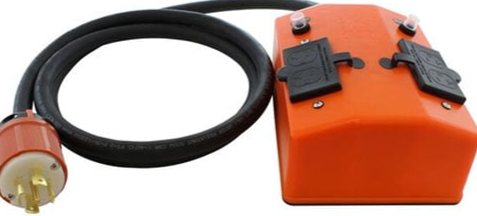
The following are all AC Connectors cables with built-in GFCI circuit breakers:
AC WORKS ® L2130P extension cable
L21-20P AC WORKS ® PDU
AC WORKS ® Extend cable PDU
L1420PDU AC WORKS ® PDU
L1430PDU AC WORKS ® HD PDU, With cable
A typical PDU extension cable for AC Connectors with GFCI protection function. (Image source: AC Connectors)
Other protective sockets
In addition to GFCI, there are several other safety mechanisms aimed at preventing electrical hazards:
ALCI (Electrical Leakage Circuit Breaker): ALCI is usually built into the hair dryer plug to prevent leakage.
IDCI (Immersion Detection Circuit Breaker): Designed to cut off power in the event of accidental immersion of electrical appliances in water.
LCDI (leakage current detection and circuit breaker): Similar to ALCI, it provides leakage current protection.
AFCI (Arc Fault Circuit Breaker): detects and cuts off arc faults that may cause electrical fires.
GFPE (Ground Fault Protection for Equipment): protects equipment from the effects of ground faults.
RCD (Residual Current Device): Equivalent to GFCI in the UK, providing similar current imbalance protection.
The functions of these devices are similar, both detecting dangerous electrical conditions and cutting off power, but they are customized according to different applications and environments.
In short, understanding the different types of protective sockets available today is crucial for improving electrical safety in various environments. GFCI sockets are extremely important for preventing electric shock, especially in environments such as bathrooms and kitchens that are prone to moisture. In addition to GFCI, other equipment such as ALCI, IDCI, LCDI, AFCI, GFPE, and RCD can also provide specialized protection for specific electrical hazards. Each device plays a unique role in protecting personnel and equipment, so the correct protective device must be selected based on specific needs. By understanding and using the correct protective sockets, the risk of electrical accidents can be greatly reduced, creating a safer environment for your home or workplace.