
- 4E, No.3 Shenfeng Road, Liuyao Community, Henggang Street, Longgang District, Shenzhen,China
- cc.shen@xypltd.com
- Call: +86 15112667855
News
Three wonderful electronic design techniques that can improve the environment
- 2026-09-04
The whole world is obsessed with electronic products. According to Statista, the total number of global smartphone users is expected to reach 6.7 billion by 2023. In a similar study in 2023, the media found that Americans replace their consumer and enterprise smartphones every 2.67 and 2.54 years, respectively. Although the amount of electronic waste is large, it only accounts for a small part of the total. Based on this data, Statista estimates that the total amount of electronic waste worldwide will reach 62 million metric tons by 2022.
Unfortunately, humans have not yet found an economical and environmentally friendly way to dispose of electronic waste. This is very concerning because improper processing and handling can release small amounts of toxic substances into our environment, including lead, mercury, arsenic, and so on. It should also be noted that the manufacturing of electronic products may also be equally harmful.
All these factors have driven the demand for green and sustainable electronic products. Although the options currently available are limited, electronic design engineers should keep in mind the following points and make more environmentally friendly choices.
Three Environmental Concepts in Electronic Product Design
Electronic engineers can use many concepts to improve designs from an environmental perspective. Specific design concepts include:
Sustainable Design
Green Manufacturing
circular economy
According to McKinsey&Company, "Our analysis shows that although research and development expenses only account for 5% or less of the total product cost, the impact on the resource utilization of the product is as high as 80%
Therefore, sustainable design may be the most important factor when developing new electronic products. This process involves incorporating environmental factors into the entire lifecycle design of the product, from raw material collection to inevitable disposal of product waste. Due to the fact that many CAD, PLM, and engineering design tools have embedded Environmental Lifecycle Assessment (LCA) into their core technologies, sustainable design has become easier to implement.
Secondly, it is no secret that the electronic manufacturing process has a significant impact on the environment. Although people are researching more sustainable processes, engineers can still make a difference. By implementing intelligent manufacturing methods, they can improve the energy efficiency of factories and reduce waste streams. In addition, by selecting renewable energy sources to power production, engineers can take the first step towards making these processes more environmentally friendly.
Finally, engineers need to consider circular economy from the beginning of product design. This means that the product, its parts, and even raw materials can be easily reused, repaired, or recycled, but this goes beyond the right to repair and resell electronic products. The company needs to propose a recycling workflow so that old products can be easily refurbished or repurposed for manufacturing new products.
Current and future environmentally friendly electronic products
This raises a question: What environmentally friendly parts and materials can engineers use? Unfortunately, for the electronics industry, the current options are limited.
Many researchers are evaluating the possibility of using abundant recyclable materials to produce electronic components. However, others choose to use more synthetic organic material routes. Specific examples include:
Silk or paper-based materials for green electronics and photonics
Ionic conductive hydrogels for bioelectronics
Biocompatibility and Biodegradable Conductive Polymer Composite Materials
Biological pigments and graphite carbon quantum dots for electrochemical energy storage
Green solvent for coating organic UV indicators and filters on slit die heads
Organic LED substrate based on bacterial cellulose and regenerated polystyrene
However, some of the most promising research is in the field of organic field-effect transistors (OFETs). The goal of OFET is to replace traditional electronic components such as substrates, semiconductors, and dielectrics. OFET materials are biodegradable and made from a variety of materials. Some concept products that have been produced include foldable displays, ID cards, sensors, and even artificial skin. However, the development of OFET is still in its early stages.
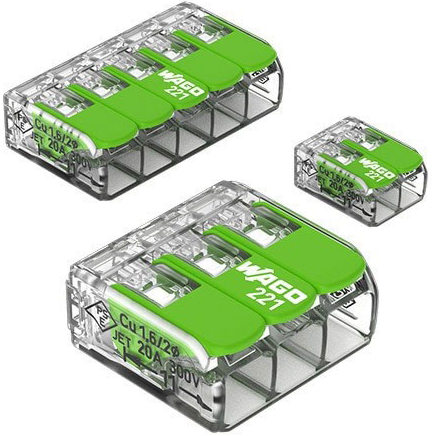
So, what green parts can engineers currently use? For example, WAGO's Green Range 221 series connector. The connector part of this device is made of bio cycling materials and recycled plastics.