
- 4E, No.3 Shenfeng Road, Liuyao Community, Henggang Street, Longgang District, Shenzhen,China
- cc.shen@xypltd.com
- Call: +86 15112667855
News
The impact of wireless communication on the transformation of the solar energy industry
- 2026-10-13
For decades, Radiocrafts has been providing customers from around the world with services such as solar tracking, inverter monitoring, and energy storage projects, accumulating rich experience in the solar energy industry. Although we provide wireless RF solutions for various fields of the Internet of Things, a clear trend emerged several years ago. More and more customers are seeking solutions related to solar energy applications from us. Recognizing the importance of this trend, we have decided to deepen our understanding of the solar energy industry.
Therefore, we have decided to participate in the Intersolar Europe, Intersolar US, RE+and other solar related exhibitions in Munich, Germany, and actively engage in the transformation of the solar energy industry. These activities provide us with valuable opportunities to interact with existing and new potential customers in the solar energy industry. We are committed to understanding the solar energy industry, and most of the insights and information we will present are obtained through continuous efforts to delve deeper into this specific niche field.
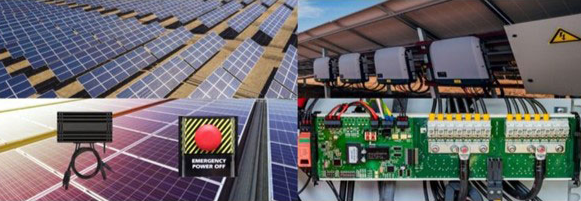
(Image source: Radiocrafts)
Therefore, in this blog, we will delve into the solar energy industry. We will first define the composition of the solar energy industry, explore industry trends, investigate the various equipment necessary to power solar facilities, and extend to the role each equipment plays in the system. We will also compare wired solutions with wireless alternatives, discuss wireless solutions tailored for the solar energy industry, and finally focus on Radiocrafts' RIIM mesh network solution, which supports multiple market leading features optimized for the needs of the solar energy industry.
What is the solar energy industry?
The solar energy industry consists of three distinct but equally important sub sectors:
(Image source: Radiocrafts)
Firstly, we will focus on introducing the massive public utility level facilities. These facilities are composed of a large number of solar panel arrays, typically consisting of thousands of panels. These solar panels are equipped with solar trackers to ensure precise tracking of the sun throughout the day for optimal angles. Usually, these facilities are installed in open fields and desert environments.
The second sub sector is medium-sized facilities, which are still large but not as large as utility level facilities in the desert. These systems are usually installed on rooftops and are divided into two categories: rooftop facilities and industrial facilities.
Finally, we will introduce the subdivision of residential facilities, which typically consist of single or multiple households equipped with solar panels on their roofs. Some configurations may also include energy storage and electric vehicle charging systems.
It is worth noting that the differences between these systems are influenced by grid guidelines, which specify how they interact with the public grid. Large facilities comply with stricter requirements that dictate how they should feed power to the grid and regulate output to prevent grid overload. Understanding these differences is crucial when comparing these different systems.
(Image source: Radiocrafts)
Another point worth mentioning is that some EU regulations currently require the integration of solar energy facilities in certain new construction projects. It is expected that this requirement will significantly increase the number of installations, especially in the areas of roofs and residential facilities.
What are the current trends in the solar energy industry?
Is there a clear trend in the solar energy industry? Are we witnessing a shift towards residential and small-scale facilities, or are all the aforementioned sub sectors growing?
Of course, we can see growth in all of these niche areas.
Although there are slight differences in requirements and system configurations to meet RF technology specifications, overall, we have noticed stable usage rates in each of the aforementioned sub sectors.