
- 4E, No.3 Shenfeng Road, Liuyao Community, Henggang Street, Longgang District, Shenzhen,China
- cc.shen@xypltd.com
- Call: +86 15112667855
News
The cautionary story of Loran and LoRaWAN
- 2026-10-20
If wireless LoRaWAN and wireless Loran are confused, the consequences would be unimaginable. Both of these technologies are fascinating stories about how connectivity and communication technologies have become the winners, while other technologies have been ruthlessly abandoned. Although Loran has given way to satellite dependent solutions, the usage of LoRaWAN in certain applications far exceeds that of NB IoT, Sigfox, and LTE-M. However, supporting vulnerable systems as use case alternatives and powerful backup systems is also valuable.
About 20 years ago, the US Department of Homeland Security discontinued the remote navigation technology known as Loran, and the US began to rely primarily on satellite based Global Positioning System (GPS) and radar for sea and air navigation. The Loran system during World War II used a global network consisting of ground transmission towers to synchronously transmit radio signals to receivers; The receiver then compares the arrival time of signals from the nearest transmission tower to determine the geographical location with astonishing accuracy.
Many security experts and communication enthusiasts have expressed regret over the disappearance of Loran, as it once provided a simple and powerful land-based navigation backup without any vulnerabilities like satellite systems. The alternative to digital eLoran has not gained widespread attention.
Ironically, the technology known as LoRaWAN (Long Range Wide Area Network) is currently squeezing out other competing technologies in its application areas.
The Cautionary Tale of Loran and LoRaWAN
Figure 1: The previous generation Loran (Loran-C) used a frequency range of 90-110 kHz to support data extraction during operation. LoRaWAN uses the frequency range of 863-928 MHz to transmit data. (Image source: Lisa Eitel)
LoRaWAN is an efficient communication technology, similar to low data long-distance Wi Fi, suitable for IoT devices in agriculture, public utilities, and industrial tracking applications. In short, this technology uses physical layer protocols for wireless signals in the narrow spectrum of 863-928 MHz (depending on the region), with data transmission distances of several kilometers in urban environments and over 10 kilometers in rural environments. Modulation around the center frequency can transmit data in a relatively interference free manner, even traveling for several kilometers and passing through various structures.
The industrial sector and government departments have been steadily adopting this technology, especially in the past decade. LoRaWAN solutions based on LoRa are more cost-effective than those based on cellular networks, partly because the operation of LoRaWAN does not rely on satellites in space. In addition, the reason why LoRaWAN's network components are cost-effective is because it endows devices with LoRaWAN functionality. In addition, LoRa technology uses unlicensed radio frequencies, which means component suppliers can deploy solutions without facing regulatory constraints like other solutions.
The Cautionary Tale of Loran and LoRaWAN
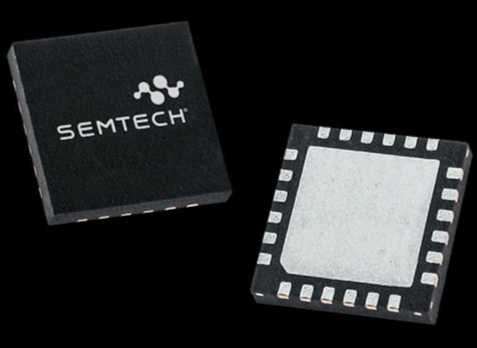
Figure 2: The SX1250 sub GHz RF chip, when used in conjunction with Semtech's SX1302 baseband engine, allows engineers to design gateways for point-to-point or local mesh LoRa networks, or more powerful and widely covered LoRaWAN networks. They cover any frequency band below 1 GHz and support various unlicensed frequency bands used by IoT applications. (Image source: Semtech Corp.)
The dominant position of LoRaWAN in wireless IoT communication is increasingly strong, and in some applications, it has already squeezed out cellular based narrowband IoT (NB IoT) and LTE-M. In fact, LoRaWAN seems to have defeated Sigfox.
The Cautionary Tale of Loran and LoRaWAN
Figure 3: A LoRa modulation technique was used, and the sensitivity of the RF transceiver exceeded -148dBm. Combined with an integrated+20 dBm power amplifier, it becomes a widely applicable and cost-effective solution. (Image source: Semtech Corp.)
NB IoT and LTE-M both use licensed spectrum and cellular transmission technologies, with data transmission capabilities of up to 250 kbps and 1 Mbps, respectively. They can operate over long distances with only slightly higher power consumption than other IoT protocol options, providing connectivity for smart buildings, utility interfaces, wearable electronic devices, and asset trackers.
Like LoRaWAN, efficient Sigfox uses unlicensed spectrum to transmit data at speeds of 100-600 bps, making it suitable for intermittent low data applications such as system monitoring, remote machine alarms, system and simple location tracking. However, due to its low usage, Sigfox has fallen into financial difficulties. UnaBiz, headquartered in Singapore, now owns SigFox and announced several new developments last year.
Fortunately, we have never seen large-scale communication satellite failures caused by deliberate destruction, space debris, or other space weather involving solar flares and electromagnetic effects such as radiation and geomagnetic storms. Therefore, our excessive reliance on these satellite navigation systems (as well as the abandonment of outdated Loran satellites) has not been questioned. In addition, there are no obvious vulnerabilities in the standardization of LoRaWAN. However, when sophisticated systems such as Sigfox enter the competition, it benefits all industries.