
- 4E, No.3 Shenfeng Road, Liuyao Community, Henggang Street, Longgang District, Shenzhen,China
- cc.shen@xypltd.com
- Call: +86 15112667855
News
SLAM: How robots navigate in unknown terrain environments
- 2026-10-20
Imagine that when we are trapped in a strange desert, the daunting task we face is to find a safe path. For a long time, navigating in unfamiliar terrain has been a common challenge faced by both humans and robots. Traditional navigation methods for robots or autonomous vehicle require pre prepared maps, but in unknown areas, such maps cannot be obtained without crossing the area. This is a typical challenge in the field of robotics, often referred to as the 'chicken and egg' problem. How can robots navigate in unknown environments without maps, and how can they draw maps without prior navigation of the environment?
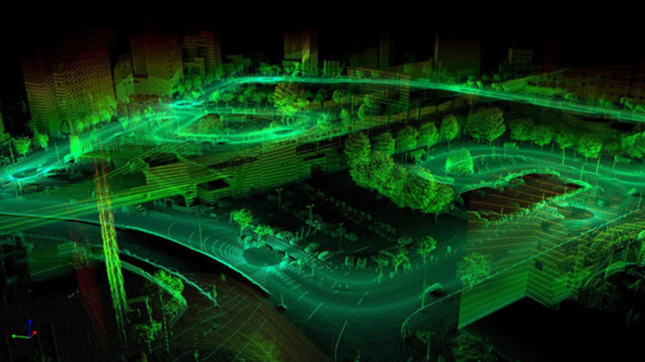
3D visualization of SLAM maps or SLAM maps created using visualization SLAM. (Image source: www.flyability. com Image source: Sigmoidal. ai)
This is where the concept of Simultaneous Localization and Mapping (SLAM) comes into play. SLAM, developed by researchers such as Hugh Durrant Whyte and John J. Leonard, is a technology that enables robots to autonomously navigate and draw real-time maps of unknown environments. SLAM enables robots to draw maps of their surrounding environment while determining their position on the map, rather than relying on existing maps. The core of SLAM includes two main processes: drawing and positioning. Drawing refers to creating a spatial representation of the environment, while localization is determining the robot's position on the map. These two processes are intertwined, as the robot continuously updates the map based on sensor data and adjusts its estimated position accordingly.
Implementing SLAM involves multiple key steps, each of which plays a crucial role throughout the entire process. These steps include landmark extraction, data association, state estimation, and updating. Landmark extraction involves identifying prominent features or landmarks in the environment that can be used as reference points for surveying and positioning. Data association involves matching sensor measurements with features in the map, while state estimation involves estimating the robot's position and direction based on sensor data. Finally, the update process includes refining the map and estimating the location based on the new sensor measurement results.
One of the key factors determining the effectiveness of SLAM is the type of sensor used. The accuracy and information level provided by different sensors are different, which will affect the quality of the generated map and positioning estimation. For example, Visual SLAM (vSLAM) uses cameras as the primary sensors, allowing robots to extract visual information from their surrounding environment. These visual information include features such as edges, corners, and textures, which can be used as landmarks for mapping and positioning. In addition, cameras can provide rich semantic information, which helps to complete tasks such as object detection and recognition. On the other hand, SLAM technology based on LIDAR uses LiDAR sensors (such as SparkFun's SLAMTEC SEN-15870) to emit laser beams to measure the distance of objects in the environment. LiDAR sensors have high precision and accuracy, making them ideal for drawing environments with complex geometric shapes. However, LiDAR sensors may be expensive and computationally intensive, which may limit their applicability in certain application scenarios.
According to the type of camera used, vSLAM is divided into multiple subcategories. This includes monocular SLAM, stereo SLAM, and RGB-D SLAM. Monocular SLAM uses a single camera to estimate the robot's motion and environmental structure. Stereoscopic SLAM utilizes stereo camera setup, which includes two cameras located at a known baseline distance apart. This setting can perform triangulation on visual features, thereby improving depth estimation and mapping accuracy. Finally, RGB-D SLAM combines traditional RGB cameras with depth sensors such as Microsoft Kinect or Intel RealSense cameras. This additional depth information can achieve more accurate 3D drawing and positioning.
Each subclass of vSLAM has its own advantages and limitations based on factors such as cost, computational complexity, and environmental conditions. For example, monocular SLAM is widely used due to its simplicity and low cost. However, this technology suffers from scale ambiguity as it cannot directly estimate the environmental scale. Stereoscopic SLAM utilizes triangulation of visual features to estimate depth and scale, thus solving this problem. Meanwhile, RGB-D SLAM has the highest accuracy and detail due to its combination of RGB images and depth information.
In addition to its application in the field of robotics, SLAM also has a large number of practical applications in various industries. In robotics, SLAM enables robots to autonomously navigate and explore dynamic environments such as warehouses, factories, and disaster areas. In autonomous vehicle, SLAM can be used to create high-definition road maps and locate vehicles in these maps. SLAM can also be applied to augmented reality (AR) and virtual reality (VR), creating immersive experiences by overlaying virtual objects onto the actual environment.
Although SLAM has many advantages, it is not without disadvantages. One of the main challenges of SLAM is the complex calculations involved in sensor data processing and real-time map updates. This is particularly challenging in environments with large amounts of data or limited computing resources. In addition, SLAM heavily relies on prominent features and landmarks in the environment. In environments with uniform or featureless terrain, SLAM may struggle to create accurate maps or effectively locate robots.
In summary, Simultaneous Localization and Mapping (SLAM) is a powerful technology that enables robots to autonomously navigate and create real-time maps of unknown environments. By combining drawing and localization into one process, SLAM enables robots to explore and understand their surroundings without prior knowledge or existing maps. Although SLAM has its own series of challenges and limitations, it has a wide range of applications, spanning robots, autonomous vehicle, AR, VR and other industries. With the continuous advancement of technology, SLAM plays an increasingly important role in shaping the future of robotics and automation.