
- 4E, No.3 Shenfeng Road, Liuyao Community, Henggang Street, Longgang District, Shenzhen,China
- cc.shen@xypltd.com
- Call: +86 15112667855
News
Silent Technology Heart: How Piezoelectric Ceramics Drive the Intelligent Future
- 2026-06-11
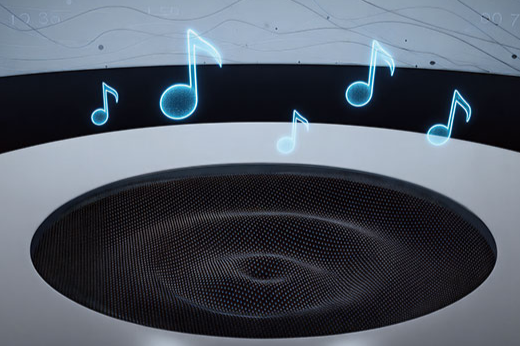
From deep-sea exploration equipment to medical ultrasound probes, from image acquisition of precision industrial equipment to touch screens of intelligent terminals, a precision functional material - piezoelectric ceramics - is driving technological progress and reshaping human-computer interaction. The core principle of piezoelectric ceramics comes from the inherent piezoelectric and inverse piezoelectric effects of their unique crystal structure: applying mechanical force will generate charges (positive piezoelectric effect, achieving sensing function); Applying an electric field will cause precise deformation or vibration (inverse piezoelectric effect, achieving driving and sound generation functions). It is precisely this bidirectional, almost instantaneous conversion between mechanical energy and electrical energy, coupled with excellent physical strength, chemical stability, and cost advantages, that makes piezoelectric ceramics a core solution in fields such as acoustic sensing, energy conversion/control, and precision actuation.
The piezoelectric effect can generate charges by applying external pressure or induce vibrations by applying an electric field. (Image source: BeStar Technologies, Inc.)
Riding on the wave of continuous iteration in the electronic information industry, piezoelectric devices are also constantly innovating and upgrading. Devices with new structures exhibit higher energy density, faster response speed, and stronger system integration capabilities, fully meeting the growing demands in diverse growth fields such as industrial automation, consumer electronics, and healthcare.
In this technological evolution, BESTAR, with its profound expertise in the field of piezoelectric ceramics, has built a mature, reliable, and complete product ecosystem through continuous innovation in material formulation, device design, and manufacturing processes, closely meeting cutting-edge needs.
Acoustic Optimization: Ultra Thin Hi Fi Solution
BESTAR's multi-layer piezoelectric ceramic driver operates based on the inverse piezoelectric effect, driving ultra-thin ceramics (about 0.5 mm) to produce precise vibrations with extremely low current (typical power consumption of about 0.1 W at 1 kHz). The ultra-thin shape and low power consumption characteristics of this driver make it particularly suitable for use in space limited environments. In addition, this type of driver does not require external sound holes, greatly simplifying panel processing, reducing manufacturing costs, and unleashing industrial design potential. At the same time, thanks to the inherent advantages of ceramic materials - wide bandwidth and high transient response - BESTAR's solution can accurately reproduce high-resolution (Hi Res) audio sources (24 bit/192 kHz), truly restoring rich details and dynamic range beyond CD quality, faithfully delivering immersive sound effects and subtle details of performances, laying a solid foundation for the new generation of high fidelity (Hi Fi) audio systems.