
- 4E, No.3 Shenfeng Road, Liuyao Community, Henggang Street, Longgang District, Shenzhen,China
- cc.shen@xypltd.com
- Call: +86 15112667855
News
Selection and Design Techniques for Manipulating Sensors
- 2026-10-14
Manipulating sensors are a type of device used to manipulate electronic devices or systems, typically consisting of a handle, rod like parts, and various buttons and switches. The most common applications are in game controllers, flight control sticks, remote controls, motion controllers, and electronic product control keys.
The most common application of manipulating sensors is in electronic games, providing an intuitive way for players to master characters or scenes in the game. In addition, it can also be applied to simulated flight games and actual flight training, providing a more realistic flying experience.
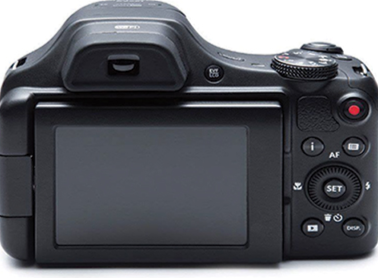
In electronic devices, manipulation sensors are also commonly used as input interfaces for users. Although touch screens also occupy a place, they lack the necessary tactile feedback and robustness. In addition, manipulation sensors occupy a smaller volume. Therefore, products such as digital cameras and portable devices still choose manipulation sensors as input devices.
Manipulating sensors can also be used for remote operation of robots, such as operating or detecting in hazardous environments, or for remote control of various devices, including toys, models, cameras, remote-controlled airplanes, etc. Manipulating sensors can also serve as input devices for virtual reality and augmented reality systems, allowing users to interact in virtual or augmented environments. Manipulating sensors has a wide range of applications in different fields, providing users with intuitive and precise control methods.
Application examples of manipulating sensors
Application examples of manipulating sensors
Common types and characteristics of manipulation sensors
Common manipulation sensors mainly include carbon film manipulation sensors, Hall manipulation sensors, as well as potential (resistive), inductive, and photoelectric manipulation sensors. Each technology has its advantages and disadvantages. The following will introduce the main principles and characteristics of these technologies.
Carbon film manipulation sensor
Carbon film manipulation sensor
1. Carbon film manipulation sensor
Carbon film manipulation sensor is an induction device that uses carbon film resistors, commonly used for manipulating levers, buttons, and other manipulation devices. The working principle of carbon film manipulation sensors is based on the variation of carbon film resistance. It usually consists of two thin film layers, one of which is a carbon film and the other is a conductive substrate, separated from each other. When the joystick or button is moved, it will cause a change in the contact area between the carbon film and the substrate, which will affect the resistance value.
Carbon film itself is a conductive material, and as the contact area between two layers increases, the resistance decreases; On the contrary, when the contact area decreases, the resistance increases. This change in resistance can be converted into a sensing signal by measuring voltage or current, thereby detecting the position and movement of the operating device.
The manufacturing cost of carbon film manipulation sensors is relatively low, making it an economical and practical manipulation sensing solution. The thin and soft carbon film makes it suitable for lightweight and flexible manipulation devices, and easy to integrate into different designs.
Carbon film manipulation sensors are highly sensitive to slight manipulation changes and can provide relatively high sensitivity, which is crucial for precise manipulation. Due to the relative durability of carbon films, these sensors typically have a long lifespan and are suitable for long-term and frequent use scenarios. However, the contact between the joystick and carbon film can cause wear and tear on the carbon film, resulting in a reduced lifespan. Currently, the industry's highest level of lifespan can reach around 2 million cycles.
Carbon film manipulation sensors can be made in different shapes and sizes, making them suitable for various applications, including buttons of different shapes, levers, etc. Carbon film manipulation sensors typically have lower power consumption, making them suitable for energy-saving applications such as battery powered devices.
Due to its simple structure, carbon film manipulation sensors are usually easy to maintain and repair, reducing maintenance costs. Due to their flexibility and cutting ability, carbon film sensors can be applied to manipulation devices of various shapes and sizes.