
- 4E, No.3 Shenfeng Road, Liuyao Community, Henggang Street, Longgang District, Shenzhen,China
- cc.shen@xypltd.com
- Call: +86 15112667855
News
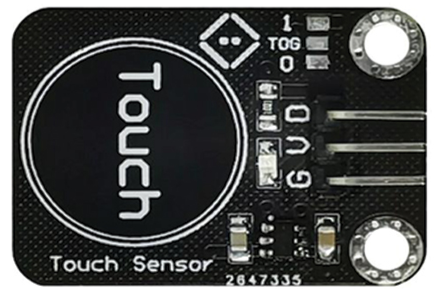
Selection and Design Solutions for Touch Sensors
- 2026-10-14
Touch sensors are devices that can detect and respond to touch, gestures, or pressure, and are widely used in many different fields. These sensors use different technologies to recognize and record interactions between devices and users. The touch screen using touch sensors is the main input method for smartphones and tablets, allowing users to operate through touch and gestures such as clicking, sliding, and zooming.
Touchscreen technology is becoming increasingly common in desktop and laptop computers, providing a more intuitive and interactive user experience. In addition, touch technology is also used to display screens, multimedia self-service systems, and public places, enabling users to easily retrieve information, navigate maps, or engage in interactive displays.
On the other hand, touch screens provide intuitive control methods in mobile games, tablet games, and other electronic games. Touch technology is also used in medical devices such as medical information systems, operating room equipment, and patient monitoring devices, improving the usability of applications. Touch screens have also been widely used in the field of education, such as interactive whiteboards and touch based laptops, making teaching more interactive. Touch technology can be used on ATM machines to simplify operations and provide a more intuitive user interface.
Touch sensor
Touch sensor
Types and product characteristics of touch sensors
At present, there are various types of touch sensors on the market, each with its own product characteristics. Common touch sensors include resistive, capacitive, infrared, ultrasonic, optical, floating, etc., which can be suitable for various application needs.
Resistive touch sensor
Resistive touch sensor
1. Resistive touch sensor
Resistive touch sensors use the change in resistance between two layers of conductive films to detect touch points. The two layers of conductive films are located on the upper and lower layers of the touch panel. When the two layers of conductive films on the touch screen come into contact, the resistance of the touch position will change, and the touch position will be detected. It is widely used in various electronic devices, but is relatively rare in modern smartphones and tablets.
Resistive touch sensors are sensitive to pressure, and their touch sensitivity is based on physical touch pressure, typically requiring a certain degree of physical pressure. Some modern resistive touch sensors can support multi touch, allowing users to perform multi touch operations simultaneously.
Resistive touch sensors typically provide relatively high accuracy, especially in single point touch, where their structure is relatively simple and typically consists of two layers of glass or thin film materials. Due to the fact that touch location is based on physical pressure detection, resistive touch sensors have a relatively small impact on surface contamination. Compared to some other touch technologies, the manufacturing cost of resistive touch sensors is relatively low.
Due to the fact that the touch position is detected through physical contact rather than conductivity, resistive touch sensors are less susceptible to interference from conductive objects. Resistive touch sensors can use opaque materials, so they can be installed on thicker or opaque surfaces, and typically do not require a large amount of power, resulting in lower energy consumption.
Capacitive touch sensor
Capacitive touch sensor
2. Capacitive touch sensor
Capacitive touch sensor is a technology that uses changes in capacitance to detect touch. It can be divided into surface capacitance and projected capacitance based on changes in capacitance caused by touch points. It mainly consists of one or more capacitive sensing areas on the touch panel and is the mainstream technology applied to devices such as mobile phones, tablets, and computer screens.
Capacitive touch sensors do not require actual physical pressure, and users can operate them by gently touching the touch panel. Most capacitive touch sensors support multi touch, allowing users to use multiple fingers to perform various gesture operations simultaneously.
Capacitive touch sensors typically have high sensitivity and can quickly and accurately sense touch positions. Due to its high sensitivity, capacitive touch sensors are suitable for handwriting and stylus operations, making it possible to write and draw on corresponding devices, and can recognize different gestures such as sliding, zooming, rotating, etc., providing a richer operating experience. Capacitive touch sensors can be made in a transparent form, so they can be applied to transparent or semi transparent surfaces, increasing design flexibility.
Due to its lack of mechanical structure, transparency, and lightweight characteristics, capacitive touch sensors contribute to the lightweight design of devices and are relatively less sensitive to surface contamination. They are usually more durable and stable than some mechanical touch technologies. When not touched, the power consumption of capacitive touch sensors is usually lower, which helps save energy. Although manufacturing costs have decreased, capacitive touch sensors may still be relatively expensive in some specific applications.