
- 4E, No.3 Shenfeng Road, Liuyao Community, Henggang Street, Longgang District, Shenzhen,China
- cc.shen@xypltd.com
- Call: +86 15112667855
News
RFSoC technology will redefine the digital backend receiver of radio telescopes
- 2026-09-29
We are entering a new era of multi frequency astronomy, in which observing different types of radio waves simultaneously enhances our understanding of the universe, far beyond what can be achieved by observing a single type of radio wave. Just like tuning a radio to a specific station, radio astronomers can adjust telescopes to receive radio waves from millions of light-years away. These telescopes can be adjusted to observe various frequencies, allowing scientists to collect various data about cosmic phenomena. By utilizing advanced computer algorithms and cutting-edge signal processing techniques, astronomers can decode these signals for studying various cosmic events and structures, including the birth and death of stars, the formation and evolution of galaxies, and the various substances that make up the universe.
A radio telescope is an astronomical instrument specifically designed to detect and analyze radio frequency radiation over a wide wavelength range from approximately 10 meters (30 MHz) to 1 millimeter (300 GHz). This radiation is emitted by various extraterrestrial sources such as pulsars, stars, galaxies, and quasars. The effectiveness of radio telescopes in detecting weak radio radiation depends on several key factors: the size and efficiency of the antenna, the sensitivity of the receiver used for signal amplification and detection, and the quality of data processing.
Modern digital backend receivers adopt cutting-edge technology, which can significantly improve the clarity and detail of astronomical observations. These advanced receivers utilize cutting-edge algorithms and high-performance hardware to efficiently process large amounts of data, enabling astronomers' research to achieve unprecedented accuracy.
The main component of a radio telescope system is the receiver. The main function of the receiver is to convert the analog signals collected by the antenna into digital form, which is crucial for advanced signal processing. This conversion process involves multiple key tasks, including filtering out noise, amplifying weak signals, and accurately digitizing the received radio waves. In addition, the digital backend receiver is responsible for managing high-speed data transmission, ensuring fast and accurate processing and analysis of large amounts of observational data.
By improving signal-to-noise ratio and providing finer resolution, these receivers can allow researchers to delve deeper into the complex details of cosmic phenomena. These advanced digital backend receivers integrated into radio telescopes have brought a complete revolution to the field of radio astronomy. This technological leap has opened up new avenues for research and exploration, providing profound insights into the universe and its countless phenomena. The functionality of modern radio telescopes has also been enhanced, allowing them to study faint and distant celestial bodies, detect faint cosmic signals, and explore the fundamental processes of the universe.
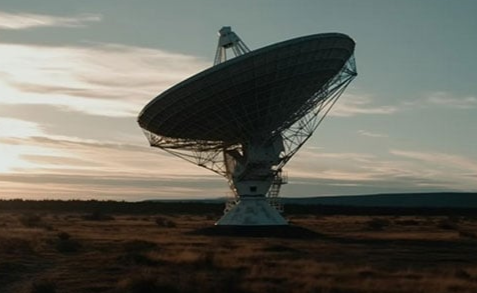
Figure 1: Radio telescopes have completely changed the field of radio astronomy. (Image source: iWave)
As we continue to improve these instruments and develop innovative technologies, the possibility of breakthrough discoveries in the field of astronomy is bound to increase. The continuous advancement of digital backend technology will further enhance astronomers' ability to uncover the mysteries of the universe, from the formation of galaxies and the life cycle of stars, to the properties of dark matter and the essence of cosmic expansion. Driven by the relentless pursuit of knowledge and continuous improvement of observation tools, the future of radio astronomy is full of exciting possibilities.
The iW-RainboW-G42M system level module (SoM) (Figure 2) integrates ZU49DR and is compatible with ZU39 and ZU29. The SoM consists of a multiprocessing system, including an FPGA, an Arm Cortex-A53 processor, and a real-time dual core Arm Cortex-R5, as well as high-speed ADC and DAC channels, capable of seamlessly acquiring, processing, and responding to RF signals. It is equipped with onboard 8 GB 64 bit DDR4 RAM with error correction codes for processing the system, as well as 8 GB 64 bit DDR4 RAM dedicated to programmable logic. RFSoC SoM stands out from numerous competitors with its industry-leading RF channel count, offering 10 GSPS of 16 channel RF-DAC and 2.5 GSPS of 16 channel RF-ADC.
Figure 2: iW-RainboW-G42M SoM includes an FPGA, an Arm Cortex-A53 processor, and a real-time dual core Arm Cortex-R5. (Image source: iWave)
This SoM incorporates an integrated ultra-low noise programmable RF PLL, simplifying the use of SoM in the final product and solving various problems related to complex clock architectures. This integration can expand the system signal processing bandwidth in the entire RF signal chain, while also enhancing SyncE and PTP network synchronization to ensure optimal synchronization levels. Using AMD Zynq UltraScale+RFSoC Gen3 devices, this module is highly suitable for RF systems that require compact packaging, low power consumption, and real-time processing capabilities. For customers who want to simplify the design architecture, accelerate the deployment of astronomical digital backend for radio telescopes, and minimize device power consumption and hardware development costs, this module is still a ready to use solution.
IWave launches RFSoC PCIe ADC DAC data acquisition card supported by G42M Zynq UltraScale+RFSoC SoM (Figure 3). This card has a 3/4 length PCIe Gen3 x8 host interface for connecting to computers/servers. Adopting cutting-edge RF and signal integrity design methods ensures high-speed connectivity. In addition, the adaptability of the card enables seamless integration into various applications, providing a universal solution for on-site deployment.