
- 4E, No.3 Shenfeng Road, Liuyao Community, Henggang Street, Longgang District, Shenzhen,China
- cc.shen@xypltd.com
- Call: +86 15112667855
News
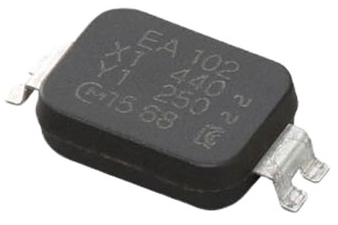
Meet the strict requirements of Y1 safety capacitors
- 2026-09-04
When selecting safety capacitors for high-voltage line to ground applications, there should be no negligence. The international standards for the safety performance testing and certification of Y1 class safety capacitors and other fixed capacitors mainly used for AC power connection circuits are very complex and strict.
The IEC 60384-14 standard is widely adopted or adapted into national regulations by countries around the world. This standard specifies the requirements for capacitors used in wire to wire (Class X) and wire to ground (Class Y) applications. Each category has additional subcategories, with Y1 specifically targeting user safety and electromagnetic interference (EMI) suppression.
Safety is the primary concern of the Y1 standard, and capacitors must be designed as safety compliant capacitors to prevent catastrophic failures. This type of capacitor is widely used in consumer electronics products, such as major home appliances, smart home devices, HVAC systems, medical equipment, and industrial control systems.
Y1 capacitors must be able to withstand pulse voltages up to 8kV, and are most commonly used in switching power supplies and other applications that require ground isolation.
That's why designers must choose the correct pre certified safety capacitor based on voltage rating, capacitance value, environmental factors, and specific application requirements. In addition, the placement of Y1 capacitors on printed circuit boards (PCBs) can significantly affect performance and EMI suppression capabilities. It is strongly recommended to follow best practices to ensure optimal capacitor placement and achieve maximum efficiency.
Strict testing requirements
The use of pre certified Y1 capacitors ensures that they have passed the required rigorous testing process, can withstand surges, operate reliably, and achieve fault safety. This type of capacitor can also withstand harsh environmental conditions, including vibration and extreme temperatures.
Capacitors will undergo tests for dielectric strength, capacitance and energy loss, leakage current, temperature stability, moisture resistance, and thermal shock. In addition, capacitors are also affected by long-term voltage stress, high-voltage transients, flammability, vibration, and impact.
Testing is monitored and certified by independent organizations or institutions, such as Underwriters Laboratories in the United States and similar institutions in other regions. During the certification body audit, manufacturers must provide complete test results, material specifications, and production record documents. After obtaining certification, it may be subject to monitoring by market supervision agencies such as the US Consumer Product Safety Commission.
Failure to comply with standards and certification rules may result in revocation of certification labels, economic penalties, product recalls, and even market bans.
Selection of dielectric materials for Y1
Y1 safety capacitors use ceramic or polymer film materials for dielectric insulation and energy storage. The type of material will affect the performance of the container, including capacitance and thermal stability.
Ceramic capacitors typically have lower capacitance values in the range of picofarads (pF) to low nanofarads (nF), suppress high-frequency EMI while acceptable for lower capacitance, and are typically more compact in appearance. Therefore, ceramic capacitors are suitable for applications such as switching power supplies, automotive circuits, LED drivers, and an increasing number of consumer devices.
Thin film capacitors have a larger capacitance range, from nF to microfarads (µ F) or larger, and are widely used in applications such as higher energy storage or lower frequency filtering. However, due to their large and bulky size, these capacitors are typically used in applications where size is not very important, such as industrial and high-power applications.
Murata Electronics' DK1 series ceramic capacitors
As product suppliers introduce smaller devices, capacitors must also continue to evolve in order to maintain high performance in smaller sizes. Murata Electronics offers a range of Y1 ceramic surface mount safety capacitors designed specifically for thin, compact AC/DC switching power supply applications.
The size of Murata's DK1 series Y1 ceramic capacitors is 11.4 mm x 6 mm, with a height of only 2.5 mm, giving designers the opportunity to achieve small power applications (Figure 1). Despite their compact structure, these devices have a capacitance range of 10 pF to 1500 pF and a usable Y1 rated voltage range of 250 VAC (RMS) to 500 V ACRMS.