
- 4E, No.3 Shenfeng Road, Liuyao Community, Henggang Street, Longgang District, Shenzhen,China
- cc.shen@xypltd.com
- Call: +86 15112667855
News
Manage lawn mower fleet using iWave remote information processing solution
- 2026-09-30
The trend of integrating vehicle remote information processing systems into lawn mowers is bringing a revolution to the landscaping industry, enhancing the functionality of these machines and enabling them to perform at their best. By integrating remote information processing technology, lawn mowers can provide real-time, portable solutions for fleet managers to monitor and manage the entire fleet, including vehicles, drivers, and assets. This technological advancement not only improves efficiency, but also brings insights that can significantly save costs and improve operations.
Challenges faced by lawn mower fleet management
Despite the growing demand in the landscaping industry, fleet managers face some challenges that may hinder efficiency and profitability. The top three challenges include:
Reduce fuel costs: Fuel costs account for a significant proportion of the operating costs of lawn mower fleets. Low fuel efficiency, idling, and improper route selection can all lead to excessive fuel consumption. By providing fuel usage data, optimizing routes, and monitoring driver behavior, remote information processing systems can reduce idling and improve fuel efficiency, thereby helping to alleviate these issues.
Reducing labor costs: Labor costs are another major expense in the landscaping industry. Managing a large workforce, ensuring productivity, and minimizing downtime are crucial for maintaining profitability. Remote information processing systems can provide assistance by tracking employee working hours, automatically filling out work schedules, and providing in-depth insights into employee work efficiency. The use of this technology can improve scheduling, reduce overtime costs, and help identify areas where efficiency can be improved.
Vehicle purchase and replacement: The cost of purchasing new vehicles and replacing old vehicles is high. Making a wise decision on the timing of vehicle replacement can save a significant amount of money. The remote information processing system can provide data on vehicle usage, maintenance requirements, and overall performance to assist managers in making data-driven equipment replacement decisions. By predicting maintenance needs and preventing unexpected failures, remote information processing technology can extend the service life of lawn mowers and reduce replacement frequency.
The impact of misjudgment in management
Any misjudgment in managing fuel costs, labor costs, vehicle procurement and replacement will seriously affect the profits of landscaping enterprises. Low fuel efficiency consumes financial resources, high labor costs erode profit margins, and poor vehicle asset management leads to unnecessary expenses for new equipment. By utilizing remote information processing technology, fleet managers can gain a comprehensive understanding of fleet operations, align their management strategies with business objectives, and improve overall efficiency and profitability
Remote Information Processing Solution for Lawn Mowers
IWave is a leading embedded design and solutions company that provides comprehensive lawn mower ready to use solutions through its robust remote information processing equipment. This device provides a wide range of interfaces and functions, which can play a key role in addressing the inherent management challenges of lawn mower and landscaping fleets.
The main functions and advantages of iWave's robust remote information processing equipment are:
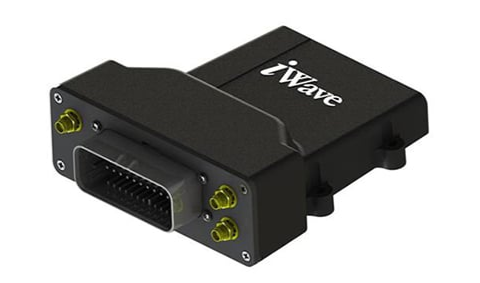
Compliant with IP67 standard: The rugged remote information processing device (Figure 1) complies with IP67 standard, ensuring durability and dust and water resistance. This makes it very suitable for use in outdoor environments that are frequently exposed to harsh conditions, ensuring the functionality of the equipment and extending its lifespan.
Image of iWave rugged remote information processing equipment
Figure 1: iWave's rugged remote information processing device. (Image source: iWave)
Multiple communication methods:
Wi Fi: allows wireless data transmission within a certain range, supports convenient connections and data transfer.
Bluetooth: Provides short-range wireless communication for connecting other devices and accessories.
LTE Cat 4/Cat M1: Ensuring high-speed cellular connectivity for long-distance data transmission is essential for real-time monitoring and remote management.
GPS/GLONASS/Beidou/Galileo: These satellite navigation systems provide accurate and reliable location tracking, which is crucial for fleet management and route optimization.
Multiple inputs/outputs:
3 x CAN: Real time monitoring and control of the engine and other critical systems for diagnosis and performance optimization.
10/100 Ethernet: Provides wired network connectivity to ensure stable and secure data transmission.
RS232/RS485/K-Line: Supports various serial communication protocols and can be integrated with different devices and systems.
USB OTG: It can easily exchange and connect data with USB devices.
Analog and digital input/output: facilitates the integration of various sensors and control systems, achieving comprehensive monitoring and automation.
Antenna support: This device supports external antennas, which can enhance the strength and reliability of communication and navigation signals.
Compliant with various protocols: FMS/J1939/ISO 15765-4/UDS. These protocols ensure compatibility with industry standards, seamless integration with existing systems, and ensure reliable communication and data exchange.
Integrated hardware security components: provide powerful security features to protect data and prevent unauthorized access, ensuring the integrity and confidentiality of sensitive information.
Additional security features: Additional security features can enhance the overall security and protection level of remote information processing systems, preventing potential threats and vulnerabilities.