
- 4E, No.3 Shenfeng Road, Liuyao Community, Henggang Street, Longgang District, Shenzhen,China
- cc.shen@xypltd.com
- Call: +86 15112667855
News
Making IoT sensor nodes more energy-efficient: a new solution that extends battery life by 20%!
- 2026-11-25
In a typical IoT system, most sensor nodes remain in sleep mode or ship mode and only switch to active mode when data collection is needed. In order to better save energy, we need to improve the current in IoT sleep mode or ship mode to maximize battery life.
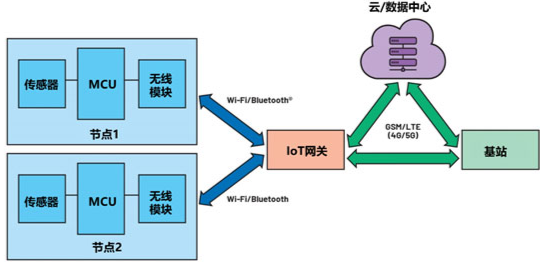
Figure 1: Typical topology diagram of IoT system
This article will mainly compare traditional solutions (using load switches, RTC, and external button controllers) with improved solutions (using integrated solutions) in ship mode or sleep mode to see which one is more energy-efficient.
Ship mode and sleep mode
In most cases, sensor nodes remain in sleep mode or ship mode. Let's first understand these two modes:
Ship mode can extend the battery life during the product shipping phase. In ship mode, the battery is electrically disconnected from the rest of the system to minimize power consumption when the product is idle or not in use.
In sleep mode, all peripheral devices of the system are either turned off or running at the minimum power requirement. IoT devices wake up regularly, perform specific tasks, and then return to sleep mode.
By disabling various peripheral devices of wireless sensor nodes, different sleep modes can be achieved. For example, during modem sleep, only the communication block is disabled. In light sleep mode, most blocks including communication block, sensor block, and digital block are disabled; In deep sleep mode, the wireless sensor nodes are completely powered off.
Enabling deep sleep mode in sensor nodes can maximize battery life; Therefore, optimizing the deep sleep current is the only way to improve the overall battery life.
Traditional energy-saving solution: using RTC, load switch, and external button controller
Here is an example of using traditional solutions to achieve energy savings for sensor nodes.
In traditional solutions, load switches and RTC are used to turn on/off wireless sensor nodes. In this method, only the load switch and RTC (real-time clock chip) work simultaneously to keep the wireless node active, thereby reducing the total static current to milliamps. The sleep time here can be programmed through the MCU in the wireless sensor node.
The external button controller can be connected to the load switch to enable the ship mode function. The external button will exit the ship mode and enter the normal operation mode of the wireless sensor node.
Tip: External button controller
The external button controller has a battery "Freshness Seal" function, which is a microprocessor monitoring circuit function. The external button controller disconnects the backup battery from any downstream circuit before the VCC is first powered on. This ensures that the backup battery will not discharge before the circuit board is first powered on, thus extending the battery life.