
- 4E, No.3 Shenfeng Road, Liuyao Community, Henggang Street, Longgang District, Shenzhen,China
- cc.shen@xypltd.com
- Call: +86 15112667855
News
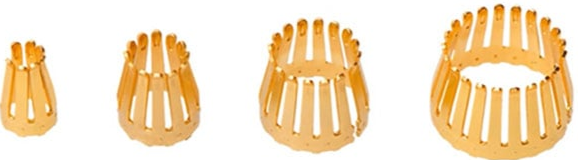
High current connectors for power applications
- 2026-09-23
With the efforts of various industries and the whole society to transition to renewable energy, electrification and energy management are advancing simultaneously, while also meeting the rapidly growing demand for electricity in various fields, such as new data centers that support artificial intelligence and machine learning.
These issues have enormous potential for new high-power applications, such as higher energy efficiency electric vehicle (EV) charging, intelligent factory automation and intelligent building management, public transportation, medical equipment, and hospital energy management, among others. Engineers and suppliers are facing enormous opportunities for new applications that can adapt to market trends and meet the needs of business customers and consumers.
McKinsey analysts wrote, "The expected and accelerated development of electrification brings enormous opportunities for value creation throughout the entire electrification value chain, including assets, components, and raw materials
The US Department of Energy's Office of Electricity states that electrification can reduce total emissions, lower energy costs, and improve the operational flexibility of utility grids, thereby optimizing distribution and generation assets rather than increasing infrastructure.
The organization stated that "transportation, construction, industry, and agriculture are the economic sectors that are beginning to electrify," while listing light electric vehicles and electric vehicle fleets, the use of efficient appliances in new residential and commercial buildings, and the renovation of old buildings, industrial processes and equipment, and agricultural equipment.
High current connection is crucial
With the increasing demand for electrification and energy management applications in the market, high current and high voltage connections will be used to connect circuits for many applications.
Reliable and flexible high current connectors and cable assembly solutions are crucial for designing robust and durable electronic applications that comply with industry and government safety standards. These applications can meet rapidly changing customer needs, including:
Support electric vehicles, hybrid vehicles, charging infrastructure, and battery management systems
Support industrial automation, robotics, machinery, as well as power generation and distribution
Promote solar, wind, hydro, and geothermal power generation and energy storage
Improve the performance and security of laptops, tablets, smartphones, game consoles, and wearable devices
Since the mid-1960s, Molex has been an innovator in the field of power connectors. The company has created a unique "pin socket" design that enables metal pins to be correctly positioned in a key controlled manner, thereby achieving safe mating of small connectors and reducing size.
For industries that want to install more electronic components in increasingly smaller spaces, small interconnect products are essential. Molex is committed to meeting these needs by providing a comprehensive range of power connectors that can support ultra-high current transmission for power supplies and systems in demanding spaces typically with strict heat limitations.
Molex has developed COEUR socket technology (Figure 1) to overcome the challenges of high current, high-performance applications, and harsh environmental conditions.
Figure 1: Molex COUPER socket technology can provide a larger conductive area and minimize heat generation to the greatest extent possible. (Image provided by Molex)
The stamping type conical socket designed by 00000COUER adopts an inclined contact beam, which can maximize the number of contact points around the radial axis of the mating pins. The mating area of each contact beam has a large conductive surface area, thereby minimizing heat generation in high current applications.
COUPER socket technology is a key component of the company's PowerWize line to board/line to bus connectors and UltraWize line to board high current connectors and cable assembly series. Due to the use of multiple contact beams, this technology can achieve low contact resistance and low voltage drop at the contact interface.
PowerWize connectors can be installed on both printed circuit boards and busbars, making them suitable for a wide range of applications such as data centers, telecommunications and networks, industrial environments, and blind matching. This connector can support voltages up to 1000 V and currents up to 190 A, and has a side locking 6 mm version and a top locking 8 mm version; Both versions use mechanical keying technology to eliminate the risk of misconnection during system integration.
The PowerWize needle holder (Figure 2) and socket comply with industry standard contact safety requirements. These devices can be connected to various substrates and can be crimped into various styles of wires and wire diameters. The PowerWize crimping socket can connect 1/0 AWG, 2 AWG, 4 AWG, 6 AWG, 8 AWG, or 10 AWG wires.