
- 4E, No.3 Shenfeng Road, Liuyao Community, Henggang Street, Longgang District, Shenzhen,China
- cc.shen@xypltd.com
- Call: +86 15112667855
News
Focus: The cornerstone of stability and engineering creativity
- 2026-09-30
Accurately measuring the center of gravity (CoG) is crucial in engineering and design, as it has a significant impact on the stability and performance of various systems. The center of gravity is the point where the weight of an object is evenly distributed, and accurate measurement of its position is crucial for requirements such as drone performance, missile accuracy, and aircraft stability.
Stability and performance of unmanned aerial vehicles
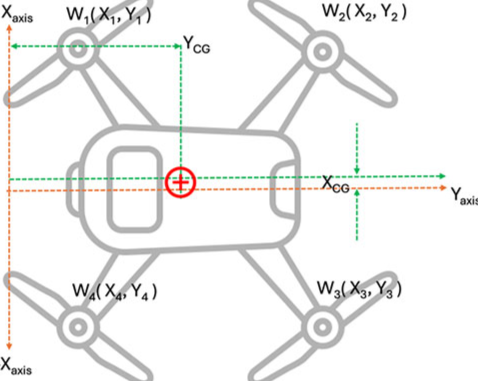
In drones, precise center of gravity can prevent drift and stability issues, thereby improving efficiency and safety. If the center of gravity of the drone is biased towards one side, it will deviate from the flight path and require continuous correction, thereby increasing fuel consumption and reducing operational efficiency. In addition, the imbalance of drones will also face stability issues, making it difficult to control and increasing the risk of accidents. Accurate measurement and adjustment of the center of gravity can enable drones to more effectively maintain their predetermined flight path, save fuel, and make operations safer and more reliable (Figure 1).
Figure 1: Accurate center of gravity measurement can prevent drone drift and stability issues, thereby improving efficiency and safety. (Image source: Loadstar)
Consider commercial drones for aerial photography. The cameras and sensors on this type of drone must be evenly distributed to maintain center of gravity balance. No matter how the payload changes, engineers must ensure that the center of gravity remains stable. This balance allows drones to capture clear images and videos without unnecessary vibrations or deviations, thereby improving their overall performance quality.
Accuracy and safety of missiles
In missile design, correctly aligning the center of gravity can ensure the missile hits the target accurately and prevent catastrophic consequences caused by deviations. In the missile design phase, engineers must calculate the center of gravity to ensure its stability during flight. This requires rigorous testing and adjustment of missile components to achieve the desired balance. By maintaining precise alignment of the center of gravity, the missile can fly along a predetermined trajectory and achieve a higher success rate in hitting the target.
Aircraft stability
In the aviation industry, maintaining the correct center of gravity is crucial for flight stability and safety, avoiding dangerous flight dynamics, and improving overall performance. Commercial aircraft require detailed center of gravity calculations during the design and pre flight inspection process. Engineers and pilots must consider the weight distribution of passengers, cargo, and fuel. Improper center of gravity balance can lead to serious consequences, including affecting flight safety and increasing operating costs. By maintaining the optimal center of gravity, aircraft can achieve smoother flight, higher fuel efficiency, and better passenger comfort.
Loadstar Sensors provides a universal and reliable center of gravity measurement solution (Figure 2), which includes pre calibrated pressure sensors, USB interfaces, and center of gravity software, enabling customizable precision measurement systems. No matter the complexity of the project, this flexibility ensures that you achieve precise center of gravity measurement. For example, in the automotive industry, manufacturers can use our center of gravity solutions to optimize vehicle stability and performance. By accurately measuring the center of gravity, engineers can make informed decisions about weight distribution, suspension settings, and overall vehicle dynamics. This will make vehicles safer and more efficient, while enhancing the experience for both drivers and passengers.