
- 4E, No.3 Shenfeng Road, Liuyao Community, Henggang Street, Longgang District, Shenzhen,China
- cc.shen@xypltd.com
- Call: +86 15112667855
News
Exploring how silicon carbide can change energy systems
- 2026-08-07
Silicon carbide (SiC) has become the cornerstone for improving efficiency and promoting decarbonization in various industries. Silicon carbide is a driving force for advanced power systems, meeting the growing global demand for renewable energy, electric vehicles (EVs), data centers, and grid infrastructure. Compared to traditional silicon devices, silicon carbide technology has more advantages, especially in terms of power conversion efficiency and thermal sensitivity. The overall impact of silicon carbide on the electronics and power industries can bring stronger profitability and sustainability.
Michael Williams, Director of Industrial and Infrastructure Marketing at Infineon Technologies, and Shawn Luke, Technical Marketing Engineer at DigiKey, experts from two leading semiconductor companies, shared their views on how silicon carbide technology affects the market and the next steps for development.
Transfer electricity consumption
Williams pointed out, "In the past, the vast majority of electricity consumption was closely related to some form of motor control, such as industrial automation applications and mobile pumps for fluids such as factories, railway transportation, and oil used in wastewater treatment or pipelines. With the introduction of silicon carbide, the market began to shift towards improving efficiency to reduce energy losses in multiple conversion stages and support high demand applications
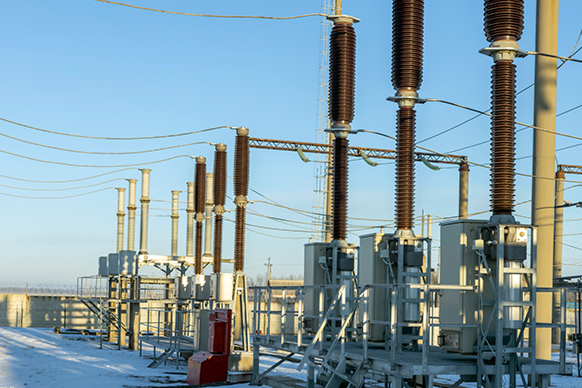
Power plant pictures
The focus of this transformation is decarbonization and the development of new generation renewable technologies, including renewable energy systems, electric vehicle infrastructure, and data centers. Through this transformation, the power conversion efficiency has been increased from around 95% to 98.5%, which significantly reduces energy loss, minimizes heat generation, and minimizes cooling requirements.
Power grid infrastructure
Simply transmitting electrical energy from the grid or high-voltage power lines to the data center will result in multiple layers of conversion and 5-6% energy loss. It is estimated that data centers alone currently account for 3% of global energy consumption, and it is expected to rise to 4% by 2030 (Data Center Magazine, 2022), and will not slow down. Silicon carbide can be used for data center power infrastructure, improving the efficiency of grid level energy storage and solar central inverters, and reducing system costs. This combination solution can enable future data centers to operate in microgrid environments, thereby reducing the load on the already tight power grid in the United States.
Data center images
Luke said, "With the development of automotive electrification, we see many reference designs adopting bidirectional charging and advanced power electronics technology, which means they can be charged during off peak hours and send electricity back to the grid during peak hours.
Silicon carbide, as a wide bandgap technology, can support higher voltage processing capabilities and faster switching speeds in applications such as electric vehicle charging. This can completely transform the global power grid infrastructure while reducing system complexity and overall costs.
Design using silicon carbide technology
Silicon carbide technology can effectively solve efficiency issues, but sometimes designers need to use wide bandgap (WBG) or silicon (Si) devices for small products.
Williams explained, "Just as designers have three optional technologies, they also have three basic design considerations. Is my goal to achieve high cost-effectiveness, compact structure, or high efficiency of the product? If I only need to choose any two priority items, designers can choose a silicon solution. However, to consider all three factors in the design, wide bandgap devices must be used. To make the product more compact, it mainly relies on increasing the switching frequency to reduce the size of magnetic devices and capacitors in the system
Due to the wide bandgap function of silicon carbide technology, the voltage level can be higher, making the implementation of next-generation technology possible. The challenge is that silicon carbide is a complex base material with much higher hardness than traditional silicon materials.
Power cycling is a key factor in the packaging development process, as it can cause stress on the interconnect between the silicon carbide chip and its lead frame or substrate, which may lead to premature device failure. Developing new interconnect technologies to improve the power cycling performance of future silicon carbide devices is crucial for meeting the requirements of future decarbonized power grids.