
- 4E, No.3 Shenfeng Road, Liuyao Community, Henggang Street, Longgang District, Shenzhen,China
- cc.shen@xypltd.com
- Call: +86 15112667855
News
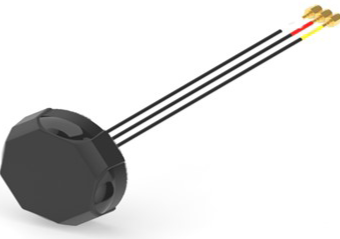
Enhance IoT applications with multifunctional and compact antennas
- 2026-10-13
Choosing the right antenna is crucial for the success of wireless applications in the Internet of Things (IoT). The selected antenna should have both high performance and flexible support for different networks in order to enhance the commercial appeal of electronic applications.
Product designers may view antennas as passive components, but as they continue to adopt new features to develop the IoT ecosystem, antennas are becoming increasingly indispensable for the success of electronic applications. Especially in industrial Internet of Things (IIoT) applications, antenna support for multiple wireless networks can achieve critical redundancy, resilience, and coverage optimization.
In addition to supporting Wi Fi applications, there is an increasing need for people to adopt cellular antennas to provide the key features needed to ensure the success of the Internet of Things. Spectrum efficiency is crucial for mitigating interference caused by the growth of wireless communication. Improving energy efficiency to extend battery life is another key requirement. Many IoT applications must operate in harsh environments, such as outdoor charging stations, which require sturdy and durable antennas to withstand harsh weather conditions or human damage.
To ensure that signal performance is not significantly affected by physical building materials such as concrete or metal, efficient antennas are required. With the competition for wireless services, clean and interference free transmission is becoming increasingly important for avoiding interference and signal noise. With the increasing demand for industrial 5G applications, this will prompt designers to adopt microcellular and small cell technologies to overcome the problem of 5G being unable to penetrate windows and walls.
Different networks are suitable for different fields, so in order to meet customer needs, product designers need more efficient antennas to achieve wider coverage, whether indoors or outdoors. Equally important, product designers can leverage the adaptability brought by multi network support to make their applications more adaptable to future needs.
Multi network support allows suppliers and customers to provide connections using one type of antenna in different environments without the need to manage complex multi antenna inventory. It also allows combining different types of connections together to balance network load and distribute data traffic across multiple paths, preventing congestion and optimizing performance by selecting the best network options for specific tasks. Customers can choose the most cost-effective network based on their data needs and avoid using cellular data when Wi Fi is sufficient.
Meet the needs of challenging environments
Wireless connectivity is often crucial for tasks in various environments, posing numerous challenges for product designers.
For example, smart factories require reliable communication between factory equipment, sensors, and central management systems, often in harsh industrial environments. In large warehouses where Wi Fi and cellular networks coexist, multiple network antennas ensure seamless connectivity for inventory tracking and logistics management.
With high-performance antennas, sensors can be deployed in remote areas to obtain data from weather stations and air quality monitors, track assets, or implement intelligent building applications. In the field of agriculture, they can provide important information about soil moisture, crop health, and irrigation system operation.
Other emerging applications include electric vehicle charging stations that require communication with backend systems regardless of weather conditions; Provide real-time display and announcement of digital signage; A secure storage solution that requires real-time monitoring and access control; And mobile ticketing and passenger information systems.
Each IoT application has unique requirements, and product designers must adapt to specific use cases as well as environmental and communication requirements. IoT devices operate on different frequency bands, which may affect performance; In addition, limited device space makes it challenging to integrate antennas without affecting other components.
When choosing the appropriate antenna for IoT applications, some factors to consider include performance, size, cost, and compatibility. This can easily lead to designers integrating different antennas to meet customer needs, resulting in complex support and supply chain issues.
Multi network protocol
Low power wide area network (LPWAN) protocols, such as Narrowband Internet of Things (NB IoT), support low data rates and require low power consumption, high gain, and high efficiency to maintain stable connections over long distances. Applications typically require omnidirectional antennas to provide a wide radiation pattern over a large area.
On the contrary, short-range Wi Fi protocols support high data transmission rates but require low gain and high efficiency to save power and avoid interference with other devices. The antenna should provide a narrow radiation pattern to focus the signal.
The cellular Internet of Things protocol LTE CAT-1 provides moderate data transmission rates and moderate range cellular connections for IoT applications. The bandwidth reception range is 1.4 MHz to 20 MHz, and the protocol supports peak downlink rates up to 10 Mb/s and peak uplink rates up to 5 Mb/s. The application can take advantage of full duplex and low power consumption.
LTE CAT-M1 strives to achieve a balance between data transmission rate and energy efficiency. Its antenna supports a bandwidth of 1.4 MHz, with peak rates of 1 Mbit/s for both downlink and uplink, requiring very low power. The application can utilize full duplex or half duplex functionality.
The CAT-4 LTE protocol can significantly improve data transmission rates, reduce latency, and meet higher requirements for IoT applications, including real-time applications. This protocol provides full duplex functionality, with a maximum downlink rate of 150 Mb/s and a maximum uplink rate of 50 Mb/s.
multipurpose antenna
TE Connectivity (TE) has launched the VersAnte series of multi port IoT antennas, which are compact in size and can achieve combined coverage of 4G/5G cellular, Wi Fi, and Global Navigation Satellite System (GNSS). Due to the ability to integrate different communication protocols into a single antenna, engineers can use it to simplify designs.
Unlike some antennas that require a specific grounding layer to achieve optimal performance, these antennas are independent of the grounding layer and can be installed on both metal and non-metal surfaces. Therefore, designers can place them in locations that optimize signal reception. The antenna cover can be sprayed with common non-metallic paint.
TE's VersAnte antenna provides 360 ° omnidirectional coverage, reducing the need for retransmission due to weak signals and thus lowering power consumption. They balance gain and power consumption, optimizing overall performance.
These compact antennas are suitable for space constrained applications and can be seamlessly embedded in small spaces such as small IoT endpoints, digital displays, and electric vehicle charging stations. The antenna is sturdy and durable, providing reliable performance under harsh conditions, and is not easily damaged by human or environmental factors.
VersAnte L000321-01 (Figure 1) is a 3-port, flat, spherical antenna. It provides 4G/5G cellular, Wi Fi, and global navigation satellite system coverage, meeting the needs of various applications ranging from IoT endpoints, smart terminals to digital signage. Its height is 1.024 inches (26.00 mm) and diameter is 3.55 inches (90.2 mm), achieving high performance in a smaller package.