
- 4E, No.3 Shenfeng Road, Liuyao Community, Henggang Street, Longgang District, Shenzhen,China
- cc.shen@xypltd.com
- Call: +86 15112667855
News
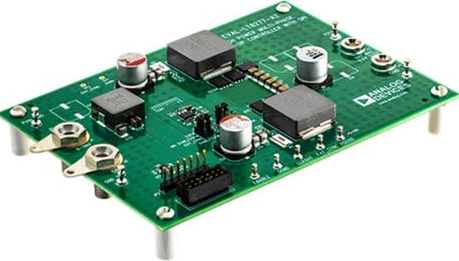
Efficient power management achieved through multi-phase boost and SEPIC controller
- 2026-09-29
DC/DC boost converter is a practical and almost ubiquitous device used to boost voltage to meet the output requirements of various electronic applications. However, when product designers need to leave room for dynamic adjustment of output, this converter becomes inefficient and lacks flexibility.
According to Analog Devices, Inc. (ADI), they can meet this demand with a multifunctional and efficient controller that can handle transitions to different power sources with reliable performance.
ADI's LT8277 multiphase boost controller is a dual phase constant frequency current mode boost controller designed to drive N-channel power MOSFETs in an interleaved manner, thereby reducing the system's filtering capacitor requirements. Its architecture can operate stably with variable supply and output voltages. It can also be configured as a single ended primary inductor converter (SEPIC), providing non inverting output to smoothly adapt to different power sources and changing conditions.
Boost converters are used to convert lower input voltages into higher output voltages. They are widely used in industry and general applications. Common use cases include extending battery life, optimizing energy transfer in cars, and providing stable power for LED lighting. They are commonly used in low-voltage applications.
The LT8277 has a Serial Peripheral Interface (SPI) that can be used to programmatically regulate the output voltage (Vout). This enables the voltage to be dynamically set to meet system requirements or external conditions, and provides design flexibility, which is highly valuable in various applications, especially when precise voltage regulation is required. LT8277 can also operate without SPI, providing a fixed output voltage of 36V or 60V.
The ADI controller also uses spread spectrum frequency modulation (SSFM) to reduce electromagnetic interference (EMI) in applications that meet the critical design requirement of strict standards. Minimizing EMI can prevent interference with other components or communication systems, while SSFM can modulate energy over a wider frequency range and reduce peak radiation at specific frequencies.
Another significant feature is the ability to parallel multiple LT8277 devices, allowing for the interleaved use of up to eight phases. By distributing load current across multiple channels, designers can reduce the current pressure on any individual device.
Flexible and adaptable
ADI's LT8277 offers a wide voltage range and frequency selection, which can be customized to meet application requirements. Engineers can utilize various voltage and power levels with minimal use of off chip components.
Its output voltage range is 9 to 60 V, which can be set through SPI. The SPI interface uses a single 12 bit shift register with bits for setting output voltage, switching 2-phase voltage drops, and configuring clock output pins.
Its operating frequency can be set between 100 kHz and 2 MHz using an external resistor, or synchronized with an external clock through the SYNC pin for precise timing.
These control methods enable the LT8277 to adapt to numerous power supply designs, accurately meet the voltage requirements of applications, and fine tune its frequency to ensure optimal performance and reduce EMI.
As a boost type DC/DC controller, the LT8277 can control two power stages with a phase difference of up to 180 °. Up to four devices can work together to achieve a 4-phase or 8-phase configuration, with each phase working in parallel to share the load and reduce pressure on individual components. Using multiple power devices helps with thermal management and reduces EMI.
LT8277 adopts a 2-phase staggered working mode, which reduces the overall ripple of input and output, thereby improving efficiency, minimizing the size of input and output capacitors, and evenly sharing the load. This minimizes battery losses during the boost conversion process, providing stable voltage for applications such as lighting and entertainment systems.
LT8277 Application Evaluation
ADI's EVAL-LT8277-AZ evaluation board (Figure 1) provides a development platform for exploring and customizing applications that use the LT8277 controller. Multiple EVAL-LT8277-AZ boards can be connected in parallel to enhance the overall power capability of the system design.