
- 4E, No.3 Shenfeng Road, Liuyao Community, Henggang Street, Longgang District, Shenzhen,China
- cc.shen@xypltd.com
- Call: +86 15112667855
News
Agilex ™ The AI development potential of 5 system level modules
- 2026-09-29
Artificial intelligence (AI) is revolutionizing various industries as it provides revolutionary solutions that can significantly improve efficiency, accuracy, and make the right decisions. In this case, the concept of edge AI - processing AI algorithms on devices at the edge of the network - has become a game changing approach. AI can achieve real-time data processing, reduce latency, improve data privacy and decision-making autonomy, which is particularly important in fields such as healthcare, robotics, and industrial automation.
As a pioneer in the field of embedded systems engineering, iWave is at the forefront of this revolution, providing an embedded platform aimed at driving the development of edge AI. These platforms are designed for applications that require high-performance computing and complex AI/ML capabilities, such as media processing, robotics, and visual computing.
IW-RainboW-G58M Introduction: New Generation AI FPGA
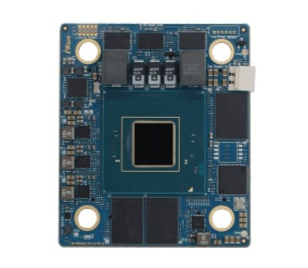
As a significant development in the embedded system market, iWave is delighted to launch an Intel Agilex based solution ™ IW-RainboW-G58M system level module (SoM) for FPGA 5 (Figure 1). This is the first FPGA that directly integrates AI functionality into its own structure, marking the beginning of a new era in FPGA technology. The iW-RainboW-G58M has been carefully designed for applications that require high performance, low latency processing, and support for custom logic implementation of embedded AI/ML, making it an ideal choice for industries such as medical imaging, robotics, and industrial automation.
iWave iW-RainboW-G58M SoM
Figure 1: iWave iW-RainboW-G58M SoM is based on Intel Agilex 5 FPGA and is the first FPGA to directly integrate AI functionality. (Image source: iWave)
The iW-RainboW-G58M SoM is compact in size, measuring only 60mm x 70mm, but powerful in functionality. This device supports Intel Agilex packaged in B32A ™ 5 FPGA and SoC E-series family devices. This device offers two different types of options to meet various application needs:
Group A: A5E 065A/052A/043A/028A/013A SoC FPGA - These models have higher performance and are suitable for applications that require more complex processing capabilities.
Group B: A5E 065B/052B/043B/028B/013B/008B SoC FPGA - These models provide cost-effective solutions for low demand tasks, ensuring flexible design and implementation.
By combining these options, developers can choose the most suitable FPGA model for specific applications while balancing performance, power consumption, and cost.
Fully leverage Intel Agilex ™ The potential of FPGA in the field of edge AI
Intel's Agilex ™ FPGA and SoC represent a significant leap forward in FPGA technology, especially in edge AI and machine learning applications. Agilex ™ The 5 series is based on Intel's AI optimized FPGA and introduces the industry's first AI tensor block in mid-range FPGAs. This tensor block is designed specifically to accelerate AI workloads, making these FPGAs highly suitable for edge AI applications where real-time processing and decision-making are critical.
Agilex ™ A major feature of FPGA 5 is its asymmetric application processor system, which includes dual Arm Cortex-A76 cores and dual Cortex-A55 cores. This configuration not only gives FPGA super processing power, but also optimizes energy efficiency. This is critical in the edge computing environment, that is, power consumption must be minimized without affecting performance.
Agilex ™ The FPGA also has enhanced digital signal processing (DSP) functionality and integrates AI tensor blocks. This combination enables FPGA to process complex AI tasks such as deep learning inference, image processing, and predictive analysis with higher efficiency and accuracy. In addition, FPGA's advanced connectivity features, including high-speed GTS transceivers supporting up to 28.1 Gbps data transfer rates, PCI Express * (PCIe *) 4.0 × 8, and DisplayPort and HDMI outputs, make it a versatile solution suitable for various applications.
A comprehensive AI/ML software ecosystem: accelerating development
IW-RainboW-G58M SoM complements a comprehensive software ecosystem, significantly accelerating the development of artificial intelligence and machine learning. The core of this ecosystem is support for common AI frameworks such as TensorFlow and PyTorch, ensuring that developers can create complex AI models using these familiar platforms without spending a lot of time learning.
The OpenVINO toolkit is an important component of this ecosystem. This open-source toolkit aims to optimize deep learning models for inference on various hardware architectures, including CPUs, GPUs, and FPGAs. By using the OpenVINO toolkit, developers can ensure that their AI models not only achieve performance optimization, but also have strong portability across different hardware platforms, thereby improving deployment flexibility.
In addition, the Intel FPGA AI suite has played a crucial role in simplifying the development process. The kit was designed with ease of use in mind, enabling FPGA designers, machine learning engineers, and software developers to create AI platforms optimized for FPGA architecture. By integrating with industry standard tools such as TensorFlow, PyTorch, and OpenVINO toolkits, the Intel FPGA AI suite enables developers to accelerate the development process while maintaining the high reliability and performance of their AI solutions.
The kit also seamlessly integrates with Intel Quartus Prime FPGA design software, which is a powerful tool that supports FPGA based system design, analysis, and optimization. This integration ensures that developers have robust and mature workflows, thereby shortening product time to market and improving the overall reliability of artificial intelligence applications.
Cloud AI and Edge AI: Comparative Analysis
With the continuous development of AI, the difference between cloud AI and edge AI is becoming increasingly important. Cloud AI relies on a large amount of computing resources from remote data centers, with high scalability and the ability to process large amounts of data. However, due to the need to transmit data on the Internet, this method often brings large delays and potential security problems.
On the other hand, edge AI demonstrates significant advantages in real-time processing, low latency, and enhanced data privacy, which are crucial. Through local data processing on the device, edge AI does not need to continuously communicate with the cloud, thereby reducing latency and improving the response speed of AI systems. This is particularly important in applications such as autonomous vehicles, industrial automation, and healthcare, where decision delays can have serious consequences.
In addition, edge AI stores sensitive information on local devices, reducing the risk of data breaches related to cloud processing, thereby helping to protect data privacy. Edge devices first perform preliminary data processing and then transmit it to the cloud for more complex analysis, and this hybrid approach is becoming increasingly popular. This method combines the advantages of edge AI and cloud AI, which can efficiently utilize resources, enhance security, and improve system performance.