
- 4E, No.3 Shenfeng Road, Liuyao Community, Henggang Street, Longgang District, Shenzhen,China
- cc.shen@xypltd.com
- Call: +86 15112667855
News
ADI platform provides components and tools for developing open acoustic AR glasses
- 2026-09-29
The integration of spatial audio and augmented reality (AR) glasses can create immersive interactive human sensory experiences, thereby better bridging the physical and digital divide. However, designers not only need to ensure that the audio enhanced AR glasses are lightweight, but also need to extend their battery life during actual use.
The smart AR glasses market seems to be in a period of rapid growth, with expected shipments increasing from slightly over 676000 units in 2023 to 13 million units in 2030, with a compound annual growth rate of 53%. The improvement in display quality, extended battery life, and overall performance will make AR glasses more practical for enterprise, industrial, and consumer use cases.
AR glasses with embedded microphones and speakers can quickly use voice assistants and music playback functions. These features can be key factors in utilizing digital twins in factory workshops, as well as providing navigation and performance prompts for riders.
High fidelity spatial audio can enhance the texture, background, and meaning of visual interaction, thereby significantly improving the user's AR experience. However, obtaining high-performance audio from AR glasses is extremely challenging, as a compact appearance is necessary to gain user recognition and satisfaction. In addition, these devices also need to be lightweight and provide longer battery life, which is quite challenging to achieve, especially when incorporating high-quality audio, video recording, or visual display functions into applications.
In addition to advances in processing power and display resolution, audio and power management will also play a crucial role in creating successful applications that will maximize demand for these devices. The challenges that need to be overcome include:
Small speakers often have a higher resonance frequency, and if the driving force is too strong, it may damage the speaker and make it more difficult to drive bass.
The noise free communication quality of picking up the wearer's voice while blocking environmental noise is crucial, but this issue becomes very complex due to the distance between the microphone and the user's mouth.
Integrating more features requires better battery management solutions to ensure faster charging speeds and longer running times. The balance between weight, functionality, and running time is key to whether the market can widely accept it.
Many use cases require users to have unobstructed ability to hear surrounding sounds, such as hearing oncoming vehicles or interacting with colleagues.
Open Audio
If designers want to combine visual and auditory information in a natural and realistic way, they should consider using open audio technology. Open audio does not require headphones or earplugs, allowing users to hear both AR sound and real-world sound simultaneously, resulting in a seamless immersive experience without affecting interaction with other users and the environment.
AR glasses are equipped with embedded microphones and open speakers, making them ideal for AR, virtual reality (VR), and mixed reality applications. Users can enjoy a more comfortable auditory experience without compromising sound quality or fidelity. These devices enable users to hear the sounds of their surroundings clearly, thereby maintaining situational awareness, ensuring safety, and collaborating or interacting with colleagues or others, while minimizing the risk or annoyance of others hearing audio content.
Engineers can use open audio technology to create electronic applications that naturally combine visual and auditory information. AR glasses using this technology add another layer of realism to users by providing spatial audio that appears to come from specific directions and distances.
Spatial audio will be a key link in the development of open audio. Spatial audio can create realistic and immersive sound environments that perfectly match visual content and user perspectives. For example, Apple's Vision Pro VR device features open audio, spatial audio integration, and 3D ear mapping, which not only enhances the immersive experience but also eliminates the need for external headphones.
Spatial audio can simulate the interaction between sound waves and the user's ears, head, and body, as well as the interaction with surfaces and objects in the physical environment. In addition, metadata such as location, orientation, distance, speed, and direction can also be used to dynamically adjust sound parameters. Based on user actions and interactions, these parameters include volume, pitch, timbre, and reverberation.
Designing an open audio application for AR glasses requires a deep understanding of the device's advantages and disadvantages, principles and best practices for spatial audio design, as well as development tools and frameworks. Video display and recording consume a lot of power, so efficiency is crucial. High quality sound and attractive design will greatly affect user acceptance. At the same time, device charging must also be convenient, and the number of charging times should be minimized as much as technology allows.
ADI's Open Audio AR Glasses Application Platform
The AR glasses platform provided by Analog Devices, Inc. (ADI) includes integrated audio capture, playback, battery management components, and algorithms. These components and development tools provide a fast track for designers to build and test open audio AR glasses applications.
ADI's audio processor codec adopts the company's Pure Voice processing algorithm, which can improve the quality of voice calls in challenging acoustic environments, while also having dynamic speaker management (DSM) ™) Algorithms can generate louder and richer sound in speaker applications with limited space.
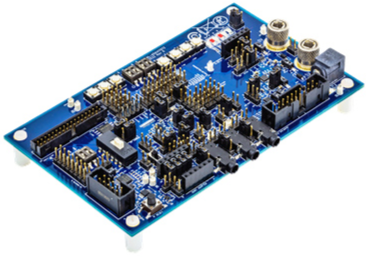
ADAU1860 (Figure 1) is equipped with a HiFi 3z audio DSP core and a low latency FastDSP core, as well as eight digital microphone (DMIC) input channels, three analog inputs, one analog output, and two pulse density modulation (PDM) output channels. Optimizing the path between analog input and DSP core to achieve low latency is an ideal choice for eliminating noise.